Why Does My Tooth Hurt When I Bite Down? 7 Possible Causes

Dr. Kuzi Hsue has been diagnosing tooth pain for almost 30 years, since earning his dental degree from the University of Washington School of Dentistry in 1991. At West Valley Dental in Tukwila, pain when biting is one of the most common reasons patients call us, and it can point to anything from a high filling to a cracked tooth or an infection. The details of how and when it hurts are often the best clues. This guide walks through the most likely causes, what each one feels like, and when to get help.
Quick Answer: A tooth that hurts when you bite down usually has one of seven causes: a crack in the tooth, a cavity, a new filling or crown that sits too high, an infection or inflamed nerve inside the tooth, a gum infection or food packed between teeth, sinus pressure on the upper back teeth, or grinding and clenching. Sharp pain when you release your bite often points to a cracked tooth. Throbbing pain that lingers, swelling, or a pimple on the gum suggests infection and needs prompt attention. Most of these problems get worse without treatment, so biting pain that lasts more than a few days should be checked.
In This Guide
- Biting Pain Clues at a Glance: Match your symptoms.
- 1. A Cracked Tooth: Pain on release.
- 2. A Cavity: Decay reaching deeper.
- 3. A High Filling or Crown: After dental work.
- 4. An Infected or Inflamed Nerve: Abscess and pulp problems.
- 5. Gum Problems and Trapped Food: When the pain is around the tooth.
- 6. Sinus Pressure: Upper back teeth.
- 7. Grinding and Clenching: Overworked teeth.
- What to Do Until You Are Seen: Short-term relief.
- When It Is an Emergency: Red flags.
- How We Find the Cause: The exam.
- Get Biting Pain Checked in Tukwila: Schedule a visit.
- Frequently Asked Questions: Quick answers.


Biting Pain Clues at a Glance
| What You Notice | Most Likely Cause | How Urgent |
|---|---|---|
| Sharp pain when you let go of a bite | Cracked tooth | Soon, before the crack spreads |
| Pain with sweets or one spot that is sensitive | Cavity | Soon |
| Tooth feels high or sore after recent dental work | High filling or crown | Call for a quick adjustment |
| Throbbing pain, lingering after hot or cold, swelling | Infected or inflamed nerve | Promptly; same day if swelling |
| Sore gum between two teeth, food keeps packing in | Gum inflammation or trapped food | Soon |
| Several upper back teeth ache with a cold or allergies | Sinus pressure | Often improves with the sinus problem |
| Many teeth sore in the morning, jaw tired | Grinding or clenching | Routine visit; a night guard can help |
Several causes can overlap, such as a cracked tooth that has also developed an infection, so an exam is the only way to know for sure.
1. A Cracked Tooth
What It Feels Like
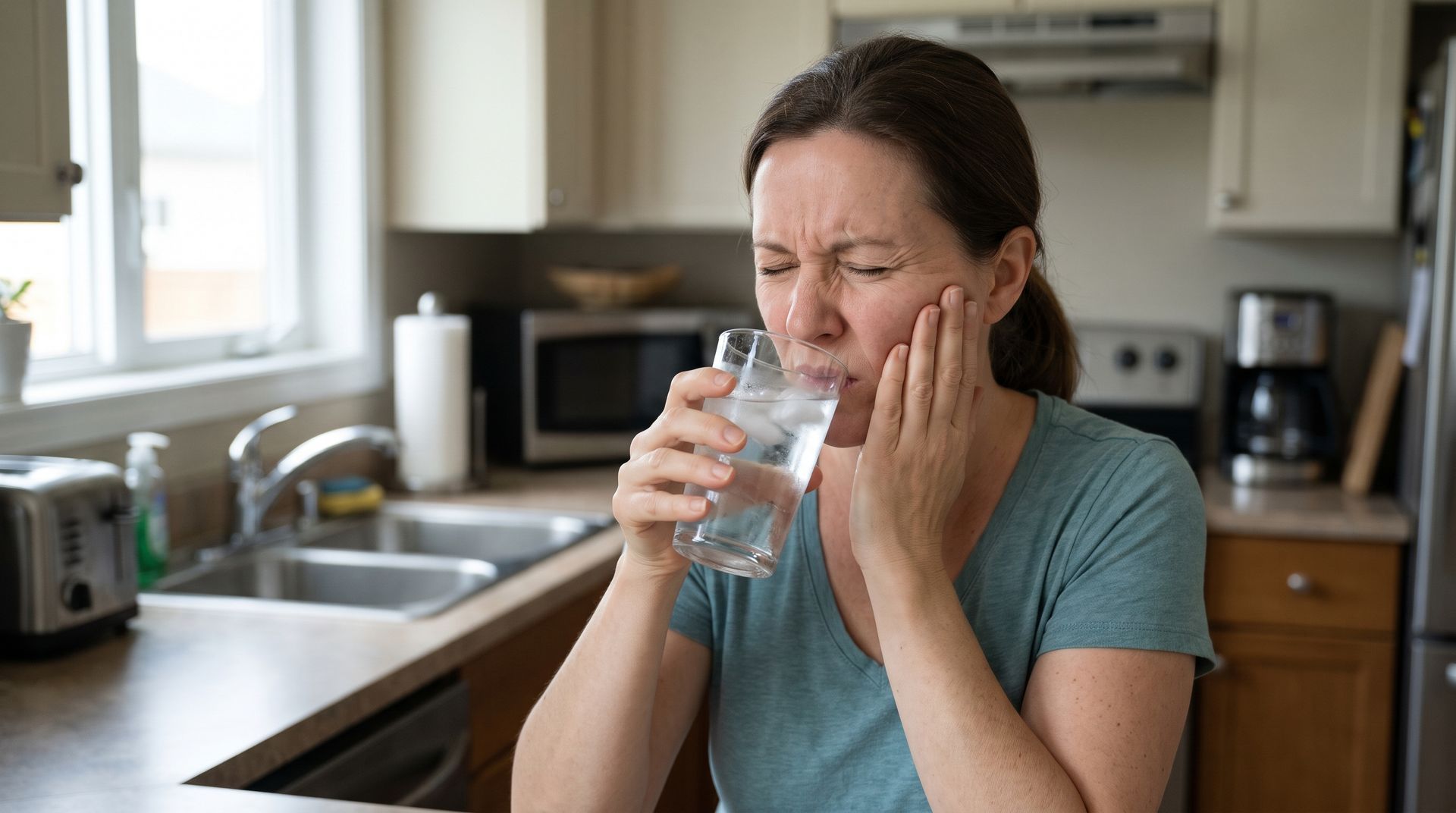
A classic sign of a cracked tooth is a sharp, quick pain when you bite on something, especially when you release the bite. The pain may come and go and can be hard to pin to one tooth.
Why It Happens
Cracks often start in teeth with large fillings, after root canals, or in people who grind their teeth or chew ice and hard candy.
Why It Should Not Wait
Cracks can grow deeper over time. A crack caught early may only need a crown, while one that reaches the root can mean losing the tooth. Our guide on
cracked tooth symptoms covers this in more detail.
2. A Cavity
What It Feels Like
A cavity often causes sensitivity to sweets or cold, and pain when chewing once the decay reaches deeper into the tooth.
Why Biting Hurts
As decay weakens the tooth and gets closer to the nerve, pressure from biting can trigger pain. Food may also catch in the cavity.
Treatment
Small cavities are treated with a filling. Deeper ones may need a crown or, if the nerve is affected, a root canal. Our guide on
filling vs. crown explains how that decision is made.
3. A High Filling or Crown
What It Feels Like
If pain started after a recent filling or crown, and the tooth feels like it hits first when you close, the new restoration may be slightly too high.
Why It Happens
When you are numb during treatment, it can be hard to judge your bite. A filling or crown that is even slightly high takes extra force every time you chew, which bruises the ligament around the tooth.
The Fix
A quick bite adjustment usually solves it within days. Our guide on
tooth sensitivity after a filling explains what is normal after dental work and when to call.
4. An Infected or Inflamed Nerve
What It Feels Like
Throbbing pain, pain that lingers after hot or cold, tenderness when tapping or biting, a darkened tooth, or a pimple on the gum can all point to an inflamed or infected nerve inside the tooth.
Why Biting Hurts
Infection can spread from inside the tooth into the bone around the root tip. That inflamed area becomes very tender under pressure.
Treatment
Root canal treatment can often save the tooth by removing the infected nerve and sealing the inside. If the tooth cannot be saved, it may need to be removed. Our guides on
signs you need a root canal and
root canal vs. extraction
explain the options.
5. Gum Problems and Trapped Food
What It Feels Like
Pain that seems to come from the gum between two teeth, often with swelling or bleeding, may be a gum infection or a piece of food packed into the gum.
Why It Happens
Food can wedge between teeth with open contacts or under broken fillings. Gum disease creates pockets where bacteria build up, and a pocket can become infected, called a periodontal abscess.
Treatment
Removing trapped food and cleaning the area often brings quick relief. Gum infections may need deep cleaning or other treatment. Our guide to
gum disease stages explains how gum problems progress.
6. Sinus Pressure
What It Feels Like
Several upper back teeth may ache, especially when you bite, bend over, or have a cold, allergies, or a sinus infection.
Why It Happens
The roots of upper back teeth sit close to the sinuses. When the sinuses are inflamed, the pressure can make those teeth feel sore.
How to Tell the Difference
Sinus-related tooth pain usually affects more than one tooth on the same side and improves as the sinus problem clears. If one tooth stays painful after the congestion is gone, a dental cause is more likely.

7. Grinding and Clenching
What It Feels Like
Teeth may feel sore or bruised, especially in the morning, often with jaw tiredness or headaches.
Why It Happens
Grinding and clenching place far more force on teeth than normal chewing. Over time, that stress can inflame the ligaments around teeth and lead to cracks.
Treatment
A custom night guard protects teeth from grinding forces. Stress management and checking for bite problems can also help.
What to Do Until You Are Seen
- Chew on the other side and stick to softer foods.
- Avoid very hot, very cold, and sugary foods if they trigger pain.
- Floss gently around the sore tooth in case food is trapped.
- Rinse with warm salt water to soothe irritated gums.
- Use an over-the-counter pain reliever as directed on the label, if it is safe for you.
- Use a cold compress on the outside of your cheek for swelling.
- Avoid chewing ice or hard foods, which can worsen a crack.
Our guide on
dental emergencies
covers more first-aid steps.
When Biting Pain Is an Emergency
Call Right Away If You Have
These symptoms can signal an infection that needs prompt treatment:
- Swelling in your face, cheek, or jaw.
- A fever along with tooth pain.
- A pimple or pus on the gum near the tooth.
- Severe, throbbing pain that keeps you up at night.
- A tooth that feels loose or a bite that suddenly feels wrong.
Go to the ER If
Swelling affects your breathing or swallowing, spreads to your eye or neck, or you feel very ill. Those are signs of a spreading infection that needs emergency medical care.
How We Find the Cause
A Careful Exam
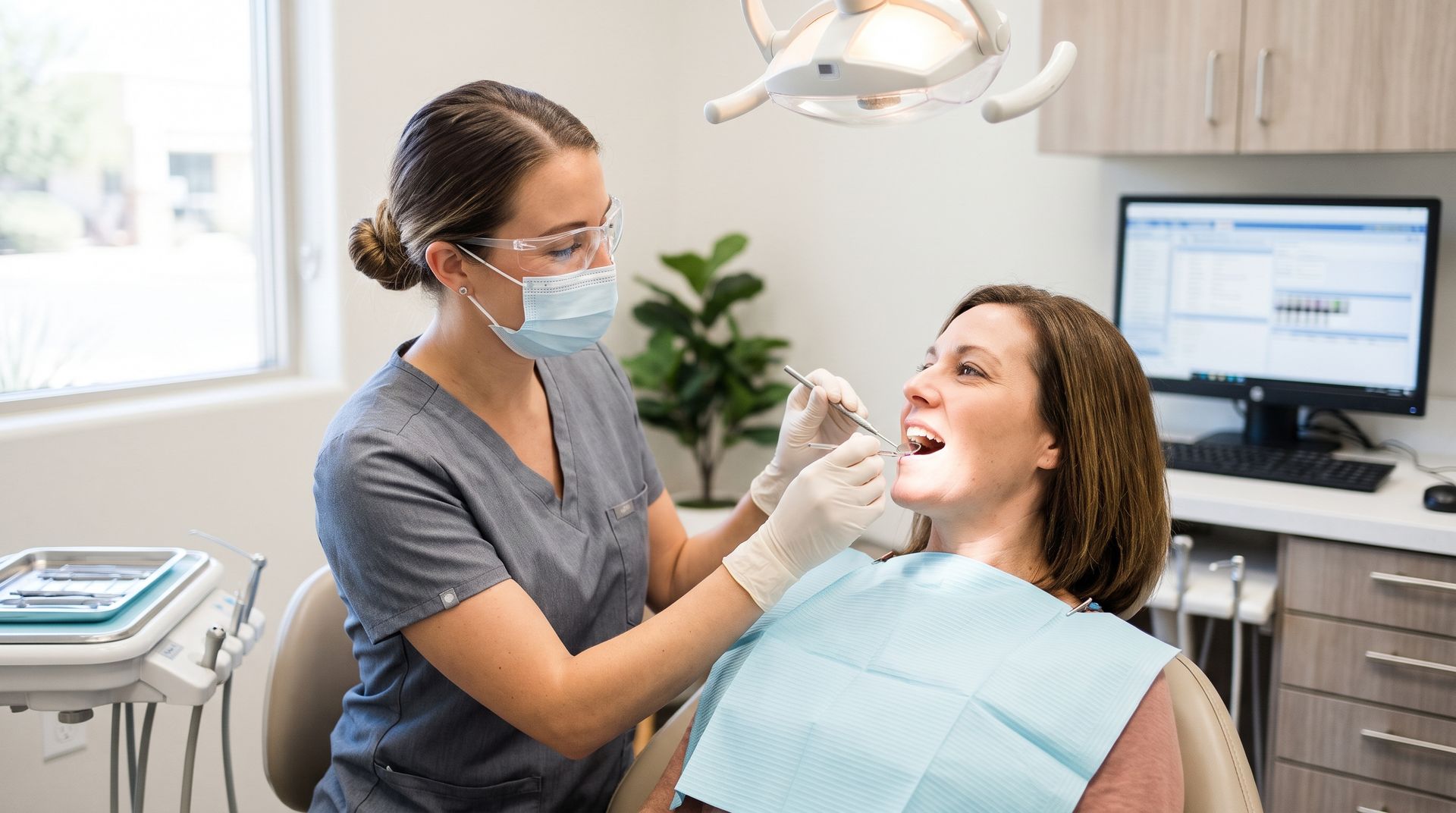
We look for cracks, decay, worn or broken fillings, gum pockets, and swelling, and we check how your teeth come together.
Digital X-Rays
X-rays show decay between teeth, infection at the root tip, and bone loss that cannot be seen in the mouth.
Bite and Cold Tests
Biting on a special tool one cusp at a time can reveal a crack. Cold testing shows whether the nerve is healthy, inflamed, or no longer responding.
Once we know the cause, we explain your options and what each involves before starting treatment.
Get Biting Pain Checked in Tukwila
If your tooth hurts when you bite down, the sooner we find the cause, the simpler the fix usually is. We offer same-day appointments for urgent problems when available, along with sedation options for anxious patients.
Call West Valley Dental at (206) 388-2262 or
contact us online. Our office is at 15668 W Valley Hwy in Tukwila, serving Renton, Kent, SeaTac, Burien, and South Seattle.

Frequently Asked Questions
Why does my tooth hurt when I bite down but not otherwise?
Pain only when biting often points to a cracked tooth, a high filling or crown, or inflammation around the root. A cavity or gum problem can also cause it.
Can a tooth hurt when biting without a cavity?
Yes. Cracks, high fillings, grinding, gum problems, sinus pressure, and infection at the root can all cause biting pain without a visible cavity.
Will biting pain go away on its own?
Pain from sinus pressure or a slightly sore tooth after dental work may fade. Pain from cracks, cavities, or infection usually gets worse without treatment.
Is pain when biting a sign I need a root canal?
It can be, especially if the pain throbs, lingers after hot or cold, or comes with swelling or a pimple on the gum. An exam and testing confirm whether the nerve is affected.
How do I know if my tooth is cracked?
Sharp pain when you release a bite, pain that comes and goes, and sensitivity to cold are common signs. Cracks are often hard to see, so a dental exam with bite testing is the best way to know.