Filling vs Crown: What's the Difference?

The core difference is how much of the tooth needs fixing. A filling repairs a small to moderate area of damage by filling the space left after decay is removed. A crown covers and protects the entire visible tooth when the damage is too extensive for a filling to hold. As a rule of thumb: small cavities get fillings, large cavities and weakened or cracked teeth get crowns. Your dentist decides based on how much healthy tooth structure remains.
At West Valley Dental in Tukwila, we place both fillings and crowns every week, and the question of which one a tooth needs comes up constantly. The answer is not arbitrary; it follows clear guidelines based on the size and type of damage. This guide explains the difference, when each is used, and how to know what your tooth needs.
In This Guide
The Quick Answer
Both restore a damaged tooth, but they handle different amounts of damage.
A Filling Is For
A filling is for small to moderate decay or minor damage, where enough healthy tooth remains to support the repair. The decay is removed and the space is filled, leaving most of the natural tooth intact.
A Crown Is For
A crown is for extensive decay, a cracked or weakened tooth, a tooth after a root canal, or a tooth that has lost too much structure for a filling to hold. The crown caps the entire tooth, protecting it from breaking.
The Deciding Factor
The amount of remaining healthy tooth structure is what decides. When enough remains, a filling works. When too little remains, a crown is needed to hold the tooth together. Our
tooth fillings page and
crowns and bridges page cover each treatment in detail.
What a Dental Filling Is
A filling is the most common dental restoration, used to repair a tooth damaged by a cavity or minor wear.
How a Filling Works
The dentist removes the decayed part of the tooth, cleans the area, and fills the resulting space with a material that restores the tooth's shape and function. Most modern fillings use tooth-colored composite resin, though other materials exist. The process is usually completed in a single visit.
What a Filling Treats
- Small to moderate cavities
- Minor chips or cracks that do not compromise the whole tooth
- Worn areas from grinding or erosion
- Small gaps in some cases
A filling preserves as much of the natural tooth as possible, repairing only the damaged area. As long as enough healthy structure remains around it, a filling restores the tooth reliably.
Modern composite fillings also bond to the tooth and match its color, so the repair is both functional and nearly invisible. This is a change from older silver amalgam fillings, which were more noticeable. For most small to moderate cavities, a tooth-colored filling restores the tooth so well that you would not know it was there.
What a Dental Crown Is
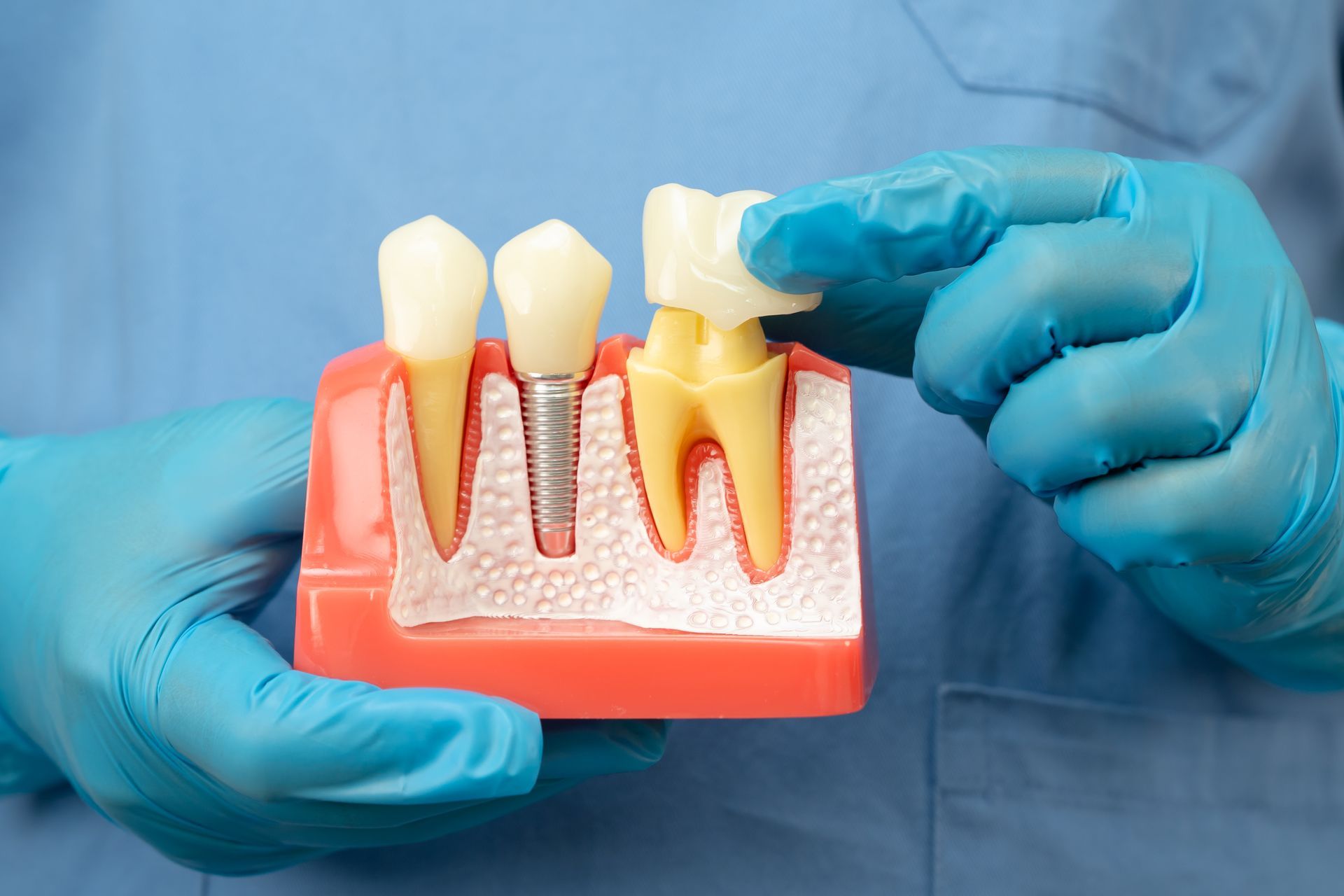
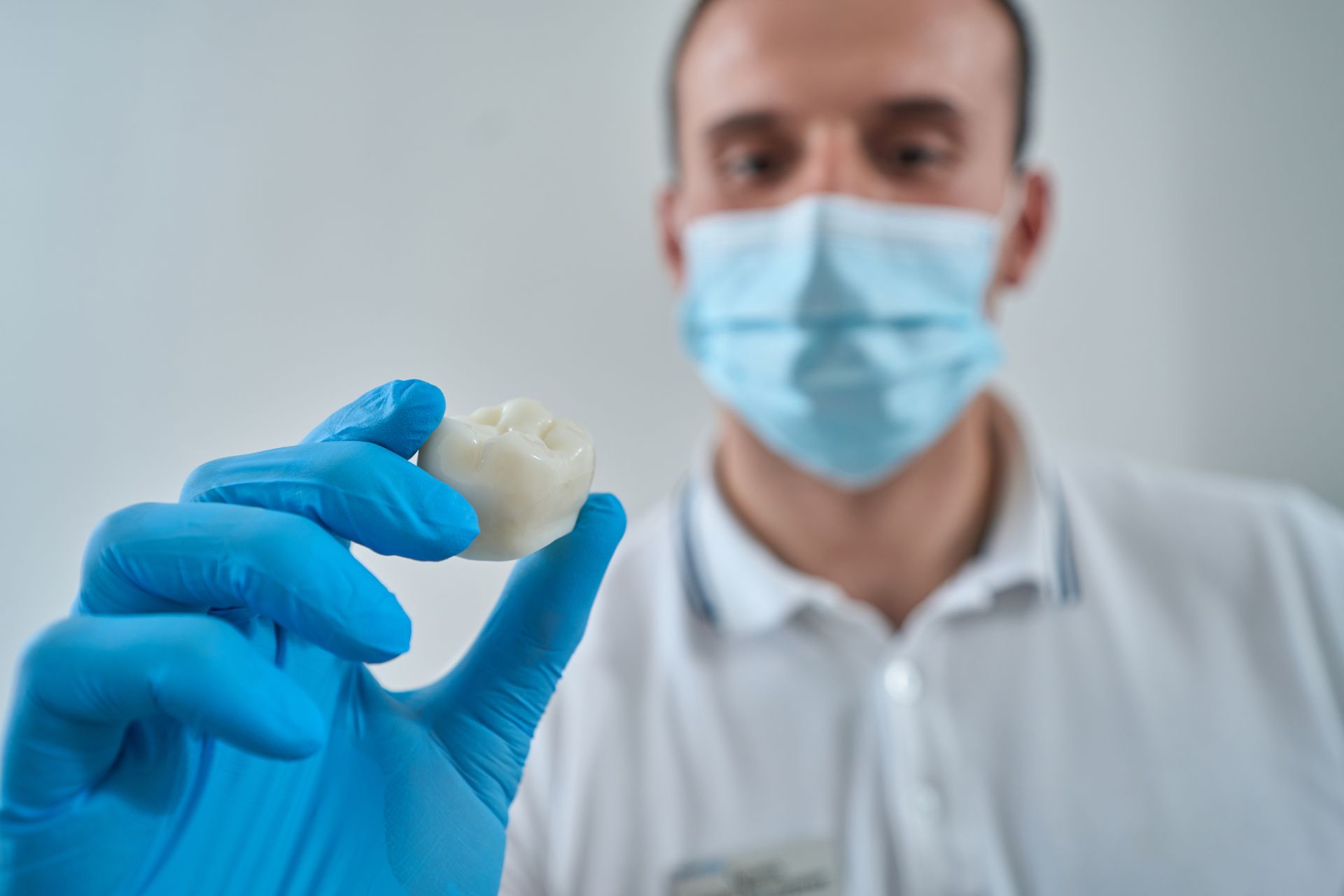
A crown is a cap that covers the entire visible portion of a tooth, restoring its shape, strength, and function when the damage is too great for a filling.
How a Crown Works
The dentist removes the damaged tissue and shapes the remaining tooth so a crown can fit over it. An impression is taken, and a custom crown is made (often in a lab, sometimes same-day). The crown is then bonded over the tooth, fully encasing it. This typically takes two visits, though some practices offer same-day crowns.
What a Crown Treats
- Large cavities too big for a filling to hold
- Cracked, broken, or severely worn teeth
- Teeth after a root canal, which become brittle and need protection
- Teeth with very large old fillings that are failing
- Teeth that need significant reshaping for function or appearance
A crown protects the whole tooth from breaking, which is why it is used when the structure is compromised. It carries the chewing forces that a weakened tooth could no longer handle on its own.
Crowns come in several materials, including porcelain, zirconia, and metal options, each with different strengths. Front teeth often get more lifelike porcelain or layered options for appearance, while molars may get stronger materials to handle heavy chewing. Your dentist matches the material to the tooth's location and how much force it bears.
The Core Difference
The fundamental distinction is coverage. A filling repairs a portion of the tooth; a crown covers the entire tooth.
This matters because a tooth's strength depends on how much healthy structure remains. A filling works by bonding into a cavity within a tooth that is still mostly solid. The surrounding healthy tooth supports the filling and handles the forces of chewing. But when decay or damage is extensive, there is not enough solid tooth left to support a filling, and a large filling in a weak tooth can cause the tooth to crack under pressure.
A crown solves this by wrapping the entire tooth, holding it together and carrying the chewing forces itself. It is the difference between patching a hole in a wall and reinforcing the whole wall. The more damage there is, the more the tooth needs full coverage rather than a patch.
This is why the decision is not about preference. It is about whether enough healthy tooth remains to support a filling, or whether the tooth needs the full protection of a crown.
Side-by-Side Comparison
Here is the comparison on one screen.
| Factor | Filling | Crown |
|---|---|---|
| Coverage | Part of the tooth | Entire visible tooth |
| Best for | Small to moderate damage | Extensive damage or weak teeth |
| Tooth structure needed | Most of tooth intact | Works with little remaining |
| Number of visits | Usually one | Usually two (or same-day) |
| Cost | Lower | Higher |
| Durability | Several years to a decade+ | 10 to 15+ years |
| Protects against cracking | No | Yes |
| Used after root canal | Rarely | Commonly |
| Amount of tooth removed | Minimal (just decay) | More (shaped for the cap) |
When You Need a Filling
A filling is the right treatment in these situations.
Small to Moderate Cavities
When a cavity is caught early and is small to moderate in size, a filling removes the decay and restores the tooth. This is the most common dental restoration and the reason regular checkups matter, because catching decay early means a simple filling instead of a crown.
Minor Damage With Healthy Structure Remaining
A small chip, a minor crack that does not threaten the whole tooth, or a worn spot can often be repaired with a filling as long as the tooth is otherwise solid. The key is that enough healthy structure remains to support the repair.
When You Want the Most Conservative Option
A filling removes only the damaged part of the tooth, preserving the rest. When a filling will do the job, it is the more conservative choice because it keeps more of your natural tooth. Catching problems early through regular
dental cleanings and exams is what keeps treatment in filling territory.

When You Need a Crown
A crown becomes necessary in these situations.
Large Cavities or Failing Fillings
When decay is extensive, or when a large old filling is failing and there is not enough solid tooth left to support a new filling, a crown is needed to restore and protect the tooth. A filling in this situation would not hold and could let the tooth crack.
Cracked or Broken Teeth
A cracked or significantly broken tooth needs the full coverage of a crown to hold it together and prevent the crack from worsening. A filling cannot reinforce a tooth the way a crown can.
After a Root Canal
A tooth that has had a root canal becomes more brittle over time because the inner tissue has been removed. A crown protects it from fracturing under normal chewing forces. Most teeth that have had a root canal, especially molars, need a crown afterward.
Severely Worn Teeth
Teeth worn down by grinding or erosion may need crowns to restore their height, function, and protection. When the wear is extensive, a crown rebuilds the tooth in a way a filling cannot.
Cost and Durability Compared
Cost and lifespan differ between the two, and they are related to the amount of work involved.
Cost
Fillings cost less than crowns. A filling uses less material, is usually done in one visit, and requires no lab work. A crown costs more because of the custom fabrication, the additional visit, and the more involved procedure. Insurance often covers both, though coverage levels vary. Our insurance and financing page covers the options.
Durability
Fillings typically last several years to a decade or more, depending on the material, size, and your habits. Crowns typically last 10 to 15 years or longer. A crown's full coverage makes it more durable for a heavily damaged tooth than a large filling would be, which is part of why crowns are chosen when damage is extensive.
Value Over Time
When a tooth genuinely needs a crown, choosing a filling to save money often backfires. A filling in a tooth that needed a crown can fail and lead to a cracked tooth, which may then require a crown anyway, or worse, an extraction and replacement. Matching the treatment to the damage is what protects the tooth and your wallet over time.
What Happens If You Choose Wrong
The treatment has to match the damage, and getting it wrong has real consequences.
If a tooth that needs a crown gets a filling instead, the filling may not hold, and the weakened tooth can crack under normal chewing. A cracked tooth can sometimes be saved with a crown, but if the crack extends too far, the tooth may need to be extracted and replaced with an implant or bridge. What started as a fixable problem becomes a much bigger one.
Going the other direction, placing a crown on a tooth that only needed a filling removes more healthy tooth structure than necessary. This is why a good dentist recommends the most conservative option that will actually work, a filling when a filling will hold, and a crown only when the tooth truly needs full coverage. The goal is always to preserve as much natural tooth as possible while protecting it adequately.
How Your Dentist Decides
The decision follows clear clinical reasoning, not guesswork.
Your dentist evaluates how much healthy tooth structure remains after removing decay or damage, whether the tooth has cracks that threaten its integrity, whether it has had or needs a root canal, how much chewing force the tooth handles, and the condition of any existing fillings. X-rays show what is happening below the surface, including decay between teeth and the health of the root.
From this, the answer is usually clear. A mostly solid tooth with a small cavity gets a filling. A tooth that is cracked, has lost significant structure, or has had a root canal gets a crown. The dentist's job is to recommend the treatment that will actually protect the tooth long-term, and to explain why. If you ever want to understand the reasoning behind a recommendation, a good dentist will walk you through exactly what they see.
Get Your Tooth Evaluated in Tukwila
The only way to know for certain whether your tooth needs a filling or a crown is an exam, because it depends on the specific damage and how much healthy structure remains. An X-ray and a clinical look tell the full story.
Contact West Valley Dental to schedule an evaluation. We serve patients across Tukwila, Seattle, and the surrounding communities, and we will examine the tooth, explain exactly what we see, and recommend the most conservative treatment that will protect it. If you are in pain or dealing with a broken tooth, our
dental emergencies page
explains how to get seen quickly.

Frequently Asked Questions
What's the difference between a filling and a crown?
A filling repairs a small to moderate area of damage by filling the space left after decay is removed, leaving most of the tooth intact. A crown covers and protects the entire visible tooth when the damage is too extensive for a filling to hold. The difference comes down to how much tooth needs fixing.
Do I need a crown or a filling for my cavity?
It depends on the size of the cavity and how much healthy tooth remains. Small to moderate cavities usually get fillings. Large cavities, or cavities in teeth that are cracked or weakened, usually need crowns because a filling would not hold. An exam with X-rays gives the definitive answer.
Is a crown better than a filling?
Neither is universally better; each fits a different amount of damage. A filling is the more conservative choice when enough healthy tooth remains. A crown is necessary when the tooth is too damaged for a filling to hold. The right choice is the one that matches your tooth's condition.
Why do I need a crown after a root canal?
A tooth that has had a root canal becomes more brittle over time because the inner tissue is removed. A crown protects it from fracturing under normal chewing forces. Most teeth that have had a root canal, especially molars, need a crown to last long-term.
Can a filling be replaced with a crown later?
Yes. If a filling fails or the tooth develops more damage, a crown can replace it as long as enough tooth structure remains to support the crown. This is common with large old fillings that eventually need the fuller protection a crown provides. Catching the change early keeps the tooth restorable.
Title or Question
Describe the item or answer the question so that site visitors who are interested get more information. You can emphasize this text with bullets, italics or bold, and add links.