How Long Does a Dental Cleaning Take? What Happens at Your Visit

A routine dental cleaning and exam usually takes about 45 minutes to an hour. The cleaning itself often takes 30 to 45 minutes, and the dentist's exam adds about 10 to 15 minutes. A first visit as a new patient may take 60 to 90 minutes because it includes a full set of X-rays, a complete exam, and a review of your health history. If you have not had a cleaning in a long time or have heavy tartar buildup, the visit can take longer. A deep cleaning for gum disease, called scaling and root planing, is a different treatment that is often split into two visits of about one to two hours each.
West Valley Dental is a family practice at 15668 West Valley Highway in Tukwila, led by Dr. Kuzi Hsue, who earned his DDS from the University of Washington in 1991. Our hygienists and doctors provide cleanings and exams for children, adults, and seniors from Tukwila, Renton, Kent, Burien, SeaTac, and South Seattle, and we have earned more than 820 patient reviews. This guide explains how long each type of cleaning takes, what happens step by step, and what can make a visit shorter or longer.
In This Guide
- Cleaning Times at a Glance: Typical lengths by visit type.
- What Happens During a Routine Cleaning: Step by step.
- Your First Visit as a New Patient: Why it takes longer.
- Deep Cleaning: Scaling and Root Planing: A different appointment.
- What Can Make a Cleaning Take Longer: Factors that add time.
- Cleanings for Kids, Seniors, and Special Needs: How visits differ.
- Does a Dental Cleaning Hurt?: Comfort and sensitivity.
- What Your Hygienist Is Looking For: More than a cleaning.
- Cleanings and Your Insurance: Coverage basics.
- Cleanings During Pregnancy: Safe and recommended.
- How to Make Your Visit Quicker and Easier: Practical tips.
- Frequently Asked Questions: Quick answers.

Cleaning Times at a Glance
| Type of Visit | Typical Length | What It Includes |
|---|---|---|
| Routine cleaning and exam | About 45 to 60 minutes | Cleaning, polishing, flossing, dentist exam, X-rays when due |
| New patient visit | About 60 to 90 minutes | Health history, full X-rays, complete exam, cleaning if appropriate |
| Cleaning after a long gap | About 60 to 90 minutes, sometimes more | Extra tartar removal, sometimes split into two visits |
| Periodontal maintenance | About 60 minutes | Cleaning for patients with a history of gum disease |
| Deep cleaning (scaling and root planing) | About 1 to 2 hours per visit, often two visits | Cleaning below the gumline with local anesthetic |
| Child's cleaning | About 30 to 45 minutes | Gentle cleaning, fluoride, exam, parent guidance |
Times vary from person to person. Your hygienist can give you a better estimate after your first visit.
New Title
New Paragraph
What Happens During a Routine Cleaning
Here is what usually happens during a typical adult visit.
Health Update
The team reviews any changes in your health, medications, and dental concerns. Some medications and conditions affect your gums or treatment.
X-Rays When Due
Bitewing X-rays, which show the back teeth and check for cavities between them, are commonly taken about once a year for adults, though timing depends on your risk. A full set of X-rays is taken less often.
Checking the Gums
The hygienist measures the spaces between your teeth and gums with a small probe. Healthy gums have shallow pockets. Deeper pockets can be an early sign of gum disease. Our guide to gum disease stages explains what those measurements mean.
Removing Plaque and Tartar
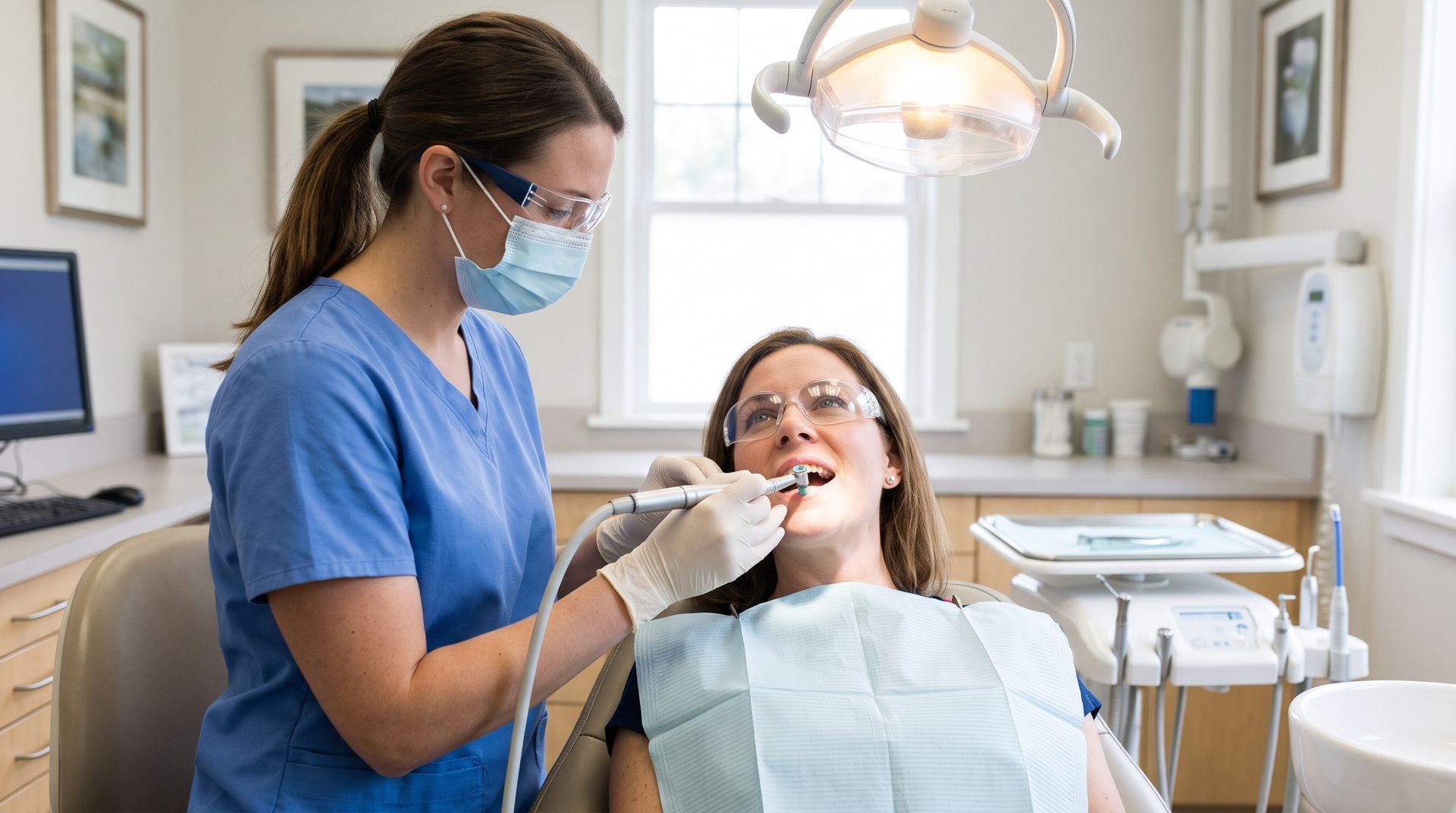
Using hand instruments, an ultrasonic scaler, or both, the hygienist removes plaque and hardened tartar from your teeth, especially along the gumline and between teeth. Tartar cannot be removed by brushing at home. Once plaque hardens into tartar, it bonds to the tooth and needs professional instruments to remove safely.
Polishing
A gritty polishing paste removes surface stains and smooths the teeth so plaque has a harder time sticking.
Flossing
The hygienist flosses between your teeth to remove leftover debris and polishing paste and checks for bleeding.
Fluoride, When Recommended
Some patients benefit from a fluoride varnish, especially those with a higher cavity risk, sensitivity, or exposed roots.
The Dentist's Exam
Dr. Hsue or another dentist on our team checks your teeth, existing fillings and crowns, gums, bite, and soft tissues, and performs an oral cancer screening. This is when any treatment needs are discussed. Learn more about our cleanings and exams.
Your First Visit as a New Patient
A first visit takes longer because we are building a complete picture of your oral health.
What Is Different
We review your medical and dental history, take a full set of X-rays or other images as needed, do a thorough exam of every tooth and your gums, and discuss your goals and any concerns.
Whether You Get a Cleaning the Same Day
If your gums are healthy, a routine cleaning is often done during the first visit. If we find signs of gum disease or heavy buildup, we may recommend a deep cleaning or a separate appointment instead.
What to Bring
Bring your insurance card, a list of medications, and any recent X-rays from a previous dentist, which can sometimes save time. Our page on
insurance and financing explains how coverage works.
Deep Cleaning: Scaling and Root Planing
A deep cleaning is not a longer version of a regular cleaning. It is a treatment for gum disease.
When It Is Needed
If measurements show deeper pockets, bleeding, and tartar below the gumline, a deep cleaning removes bacteria and tartar from the root surfaces under the gums.
How Long It Takes
Deep cleanings are often done one side or one half of the mouth at a time, in two visits of about one to two hours each. The area is numbed for comfort.
What Happens Afterward
Gums may be tender for a few days. Follow-up visits check how the gums are healing. Patients with a history of gum disease usually move to periodontal maintenance cleanings, often every three or four months instead of every six. Learn more about our
gum disease treatments.
What Can Make a Cleaning Take Longer
Several factors can add time to a visit:
- A long gap since your last cleaning, which allows more tartar to build up.
- Heavy tartar, especially behind the lower front teeth.
- Gum inflammation or bleeding, which requires more careful work.
- Lots of dental work, such as crowns, bridges, implants, or braces, which take time to clean around.
- Sensitivity, which may require a slower pace or numbing gel.
- X-rays or additional exams that are due at that visit.
- Questions or treatment discussions, which are always welcome.
- A strong gag reflex or anxiety, which may call for breaks.
When a Cleaning Is Split Into Two Visits
If there is a lot of buildup, the hygienist may do an initial cleaning and have you return for a second, more detailed cleaning after the gums have had time to calm down. This is often more comfortable and more effective.
Cleanings for Kids, Seniors, and Special Needs
Children
Children's cleanings are usually shorter, often 30 to 45 minutes, with gentle cleaning, fluoride, and plenty of explanation. We also talk with parents about brushing and diet.
Seniors
Older adults often have more dental work, dry mouth from medications, or gum recession, which can add time. Cleaning around crowns, bridges, implants, or partial dentures takes extra care.
Patients With Implants
Implants are cleaned with instruments designed to protect their surfaces. Our guide to how long dental implants last explains why regular cleanings are important for implant health.
Patients With Anxiety or Special Needs
Longer appointments with breaks, or sedation in some cases, can make visits easier. Our guide to
sedation dentistry for anxious patients explains the options.
Does a Dental Cleaning Hurt?
Most Cleanings Are Comfortable
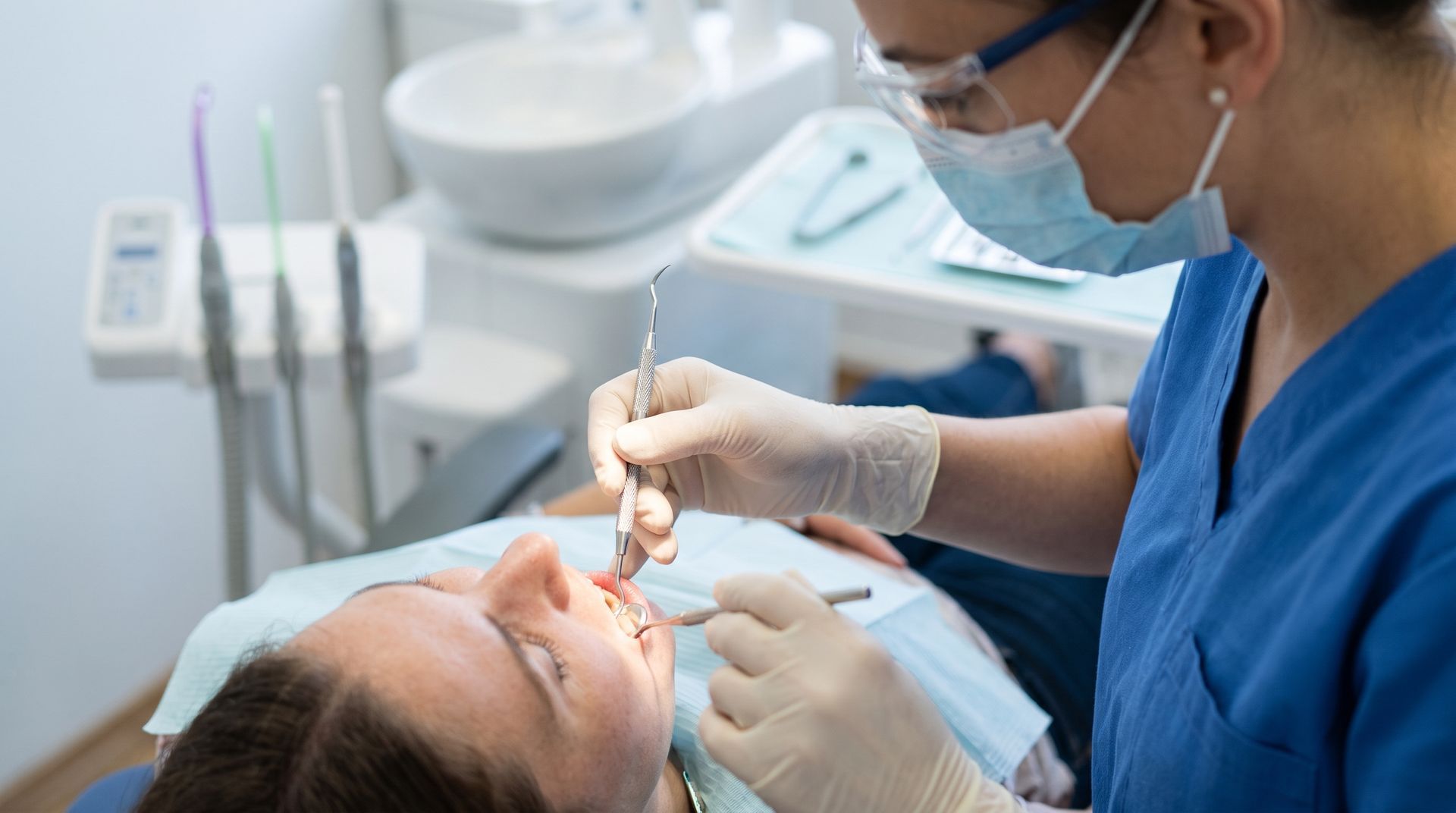
A routine cleaning should not be painful. Many people feel some scraping or vibration, and some notice sensitivity near the gumline or on exposed roots.
If Your Gums Bleed
Bleeding during a cleaning often means the gums are inflamed. It usually improves with regular cleanings and better flossing at home.
Managing Sensitivity
Let your hygienist know if anything is uncomfortable. Numbing gel, desensitizing toothpaste in the weeks before your visit, or a slower pace can help.
After the Visit
Teeth often feel smooth and clean, and many patients notice their gums look healthier within a week or two of a thorough cleaning. Gums may be slightly tender for a day, especially after a long gap between cleanings.
How to Make Your Visit Quicker and Easier
Keep Regular Appointments
The best way to keep cleanings short is to schedule them regularly. Less buildup means less time. Our guide on how often to go to the dentist explains recommended intervals.
Brush and Floss Daily
Good home care reduces plaque and inflammation, which makes cleanings faster and more comfortable. Our guide on how to prevent cavities offers practical tips.
Arrive a Few Minutes Early
Updating forms and insurance before your appointment keeps your visit on schedule. If you have new medications or health changes, having that list ready saves time at check-in.
Share Concerns Upfront
Mention sensitivity, anxiety, or any problems at the start, so the team can plan accordingly.
What Your Hygienist Is Looking For
A cleaning is also a careful check of your mouth. While cleaning, your hygienist watches for:
- Bleeding or swollen gums that may signal gingivitis or gum disease.
- Deeper gum pockets compared with your last visit.
- Soft spots or stains that could be early cavities.
- Worn or cracked fillings and chipped teeth.
- Signs of grinding, such as flattened or worn edges.
- Dry mouth or changes in the tongue, cheeks, or palate.
Anything unusual is noted for the dentist to review during the exam, so small problems can be handled before they grow.
Cleanings and Your Insurance
Typical Coverage
Many dental plans cover two routine cleanings and exams per year, often at little or no cost to you, because prevention saves money for everyone. X-rays are usually covered on a set schedule.
Frequency Limits
Some plans limit cleanings to once every six months to the day, so scheduling too early can mean an unexpected bill. Our team can help check your eligibility before you book.
Deep Cleanings and Maintenance
Scaling and root planing and periodontal maintenance cleanings are usually covered differently than routine cleanings. Ask for an estimate before treatment.
Cleanings During Pregnancy
Routine cleanings are safe and encouraged during pregnancy. Hormonal changes can make gums more prone to swelling and bleeding, a condition often called pregnancy gingivitis, so keeping up with cleanings matters. The second trimester is often the most comfortable time for a visit. Our guide on
dental care during pregnancy covers what to expect.
Why Cleanings Are Worth the Time
An hour twice a year can prevent problems that take far longer to fix. Regular cleanings remove tartar that causes gum disease, and exams catch cavities, cracked teeth, and other issues while they are small. Catching a cavity early can mean a simple filling instead of a crown or root canal. Our guide to
what counts as a dental emergency covers symptoms that should not wait for your next cleaning.
Schedule Your Cleaning in Tukwila
If you are due for a cleaning, or it has been a while, we would be glad to see you. Our team will make your visit comfortable, explain what we find, and help you keep your smile healthy. Learn more about our preventive dentistry.
Call West Valley Dental at (425) 470-5803 or
contact us. We are located at 15668 West Valley Highway in Tukwila.

Frequently Asked Questions
How long does a teeth cleaning take at the dentist?
A routine cleaning and exam usually takes about 45 minutes to an hour. The cleaning itself often takes 30 to 45 minutes, and the dentist's exam adds about 10 to 15 minutes.
Why does my first dental visit take longer?
New patient visits include a full health history, a complete set of X-rays, and a thorough exam, which usually takes 60 to 90 minutes.
How long does a deep cleaning take?
Deep cleanings are often done in two visits of about one to two hours each, treating one side or half of the mouth at a time.
Can a dental cleaning be done in 30 minutes?
Sometimes, for a quick cleaning on a patient with healthy gums and little buildup. Most adult visits that include an exam take closer to 45 to 60 minutes.
How often should I get my teeth cleaned?
Most people benefit from a cleaning every six months. Patients with a history of gum disease often need cleanings every three or four months.