The Stages of Gum Disease and How to Treat Them

Gum disease progresses through four stages: gingivitis, early periodontitis, moderate periodontitis, and advanced periodontitis. The first stage, gingivitis, affects only the gums and is fully reversible with a professional cleaning and good home care. Once the disease reaches periodontitis, it starts destroying the bone that supports your teeth, and that damage cannot be fully undone, only managed and slowed. This is why catching gum disease early makes such an enormous difference, and why the warning signs are worth knowing.
At West Valley Dental in Tukwila, treating and reversing gum disease is part of our everyday work, so we see the full range from mild gingivitis to advanced cases. This guide walks through each stage, what it looks like, how it is treated, and how to keep your gums out of the danger zone.
In This Guide
- What Gum Disease Is: The root cause.
- The Four Stages: Gingivitis to advanced.
- Which Stages Are Reversible?: The critical dividing line.
- How Each Stage Is Treated: From cleaning to surgery.
- Signs You Might Have Gum Disease: What to watch for.
- How to Prevent It: Staying healthy.
- How Dentists Identify the Stage: Probing and X-rays.
- What Happens If Left Untreated: The progression.
- Why It Matters Beyond Your Mouth: Whole-body health.
- What Speeds It Up: Risk factors.
- How Fast It Progresses: The timeline.
- Frequently Asked Questions: Quick answers.

What Gum Disease Is
Gum disease starts with plaque, the sticky film of bacteria that constantly forms on your teeth. When plaque is not removed by daily brushing and flossing, it hardens into tartar and the bacteria multiply along and below the gumline. Your gums respond with inflammation, and that inflammation is the beginning of gum disease.
Left unchecked, the process moves inward and downward, from irritated gums to the bone and fibers that hold your teeth in place. Gum disease is extremely common, affecting a large share of adults over 30, and in its early phases it is often painless, which is exactly what makes understanding the stages so valuable.
The Four Stages
Gum disease follows a predictable path, and each stage has its own signs and consequences.
Stage 1: Gingivitis
Gingivitis is the earliest and mildest stage, and it affects only the gums. Plaque at the gumline irritates the tissue, causing redness, puffiness, and bleeding when you brush or floss. Crucially, no bone or connective tissue has been damaged yet, so at this point the disease is completely reversible. It is also easy to miss, since it rarely hurts.
Stage 2: Early Periodontitis
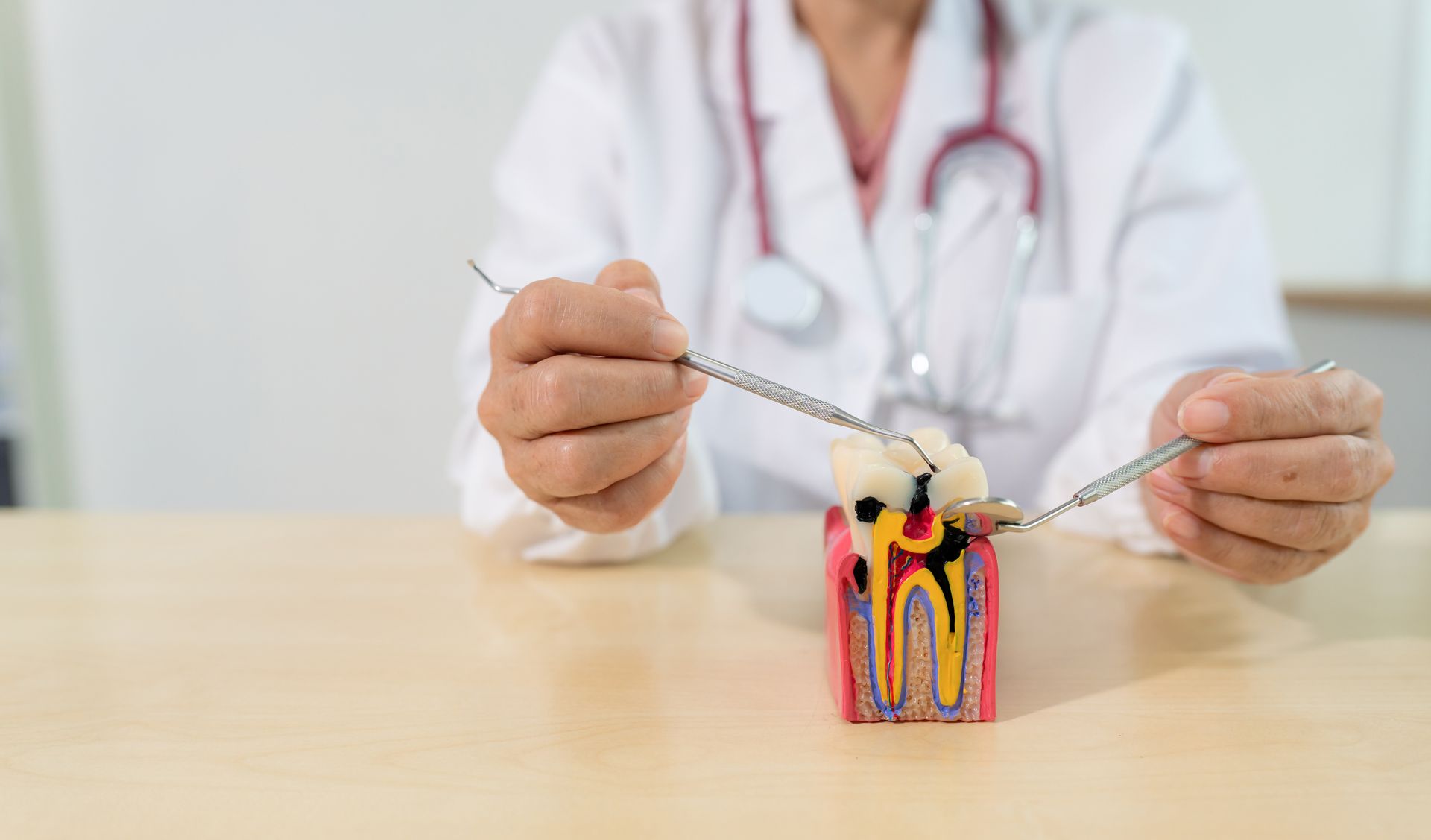
If gingivitis is not addressed, it advances to early periodontitis. The inflammation spreads below the gumline, the gums begin to pull away from the teeth, and small pockets form that trap bacteria and debris. Some of the supporting bone starts to be lost here, and that loss is not reversible, though it can be halted. Gums may begin to recede, and bleeding often continues.
Stage 3: Moderate Periodontitis
At moderate periodontitis, the pockets deepen and more bone and connective tissue are destroyed. Recession becomes more noticeable, teeth may feel slightly loose, and persistent bad breath or a bad taste can appear as infection settles into the pockets. The damage is more significant, and treatment becomes more involved.
Stage 4: Advanced Periodontitis
In the final stage, the fibers and bone anchoring the teeth are severely damaged. Teeth loosen, shift, or change how they fit together when you bite, and without aggressive treatment some may be lost or need to be removed. This stage often requires surgical treatment to control the disease and save what can be saved.
| Stage | What's Happening | Typical Treatment |
|---|---|---|
| Gingivitis | Gum inflammation, no bone loss | Professional cleaning, better home care |
| Early periodontitis | Pockets form, bone loss begins | Scaling and root planing (deep cleaning) |
| Moderate periodontitis | Deeper pockets, more bone loss | Deep cleaning, sometimes localized treatment |
| Advanced periodontitis | Severe bone and fiber loss, loose teeth | Surgery, grafts, possible extraction |
Which Stages Are Reversible?
This is the single most important thing to understand about gum disease. Only the first stage, gingivitis, is truly reversible, because the damage is limited to inflamed gum tissue with no structural loss. With a professional cleaning and consistent brushing and flossing, gums at this stage can return fully to health.
Once the disease crosses into periodontitis, the calculation changes. You cannot regain lost bone and structural support the way you started with it, so periodontitis cannot be fully cured. It can, however, be controlled and stabilized, and modern treatment can even rebuild bone and tissue to some degree. The goal shifts from reversal to stopping the progression and keeping your teeth. That dividing line between reversible and manageable is exactly why acting at the gingivitis stage matters so much.
How Each Stage Is Treated
Treatment scales with the stage of the disease. Gingivitis usually resolves with a professional cleaning to remove plaque and tartar, paired with improved home care. Early and moderate periodontitis are typically treated with scaling and root planing, a deep cleaning that removes bacteria and tartar from below the gumline and smooths the roots so gums can reattach. Advanced periodontitis may call for surgical procedures such as flap surgery or gum and bone grafts, and in some cases extraction of teeth that cannot be saved.
The right approach depends on how far the disease has progressed and on individual factors like your overall health and whether you smoke. Our team can assess exactly which stage you are in and what will work best. You can read more on our
comprehensive gum disease treatment guide and our
gum disease treatments page.
Signs You Might Have Gum Disease
Because the early stages are often painless, the signs are easy to dismiss. Watch for these.
- Gums that bleed when you brush or floss.
- Red, swollen, or tender gums.
- Persistent bad breath or a bad taste in your mouth.
- Gums that are receding or teeth that look longer.
- Loose or shifting teeth, or a change in your bite.
Any of these is a reason to have your gums checked. The earlier gum disease is caught, the more of it can be reversed rather than merely managed.
How to Prevent It
The good news is that gum disease is largely preventable. Brushing twice a day, flossing daily to disrupt plaque between teeth and at the gumline, and keeping regular professional cleanings are the foundation, since cleanings remove the hardened tartar that home care cannot. Not smoking also makes a major difference, as tobacco greatly raises the risk and severity of gum disease. For more, see our tips to prevent gum disease.
How Dentists Identify the Stage
Because the early stages can look and feel similar, dentists rely on more than a visual glance to pin down exactly where you are. A key tool is measuring the depth of the space between your gums and teeth with a small probe. Healthy gums generally measure around one to three millimeters. Pockets in the range of four to five millimeters usually signal that the disease has progressed into periodontitis, and deeper pockets point to more advanced stages.
Dental X-rays add the other half of the picture by showing the level of bone around the teeth, which reveals how much support has already been lost, something you cannot see from the surface. Together, probing depths and X-rays let your dentist stage the disease accurately and recommend treatment that matches the actual extent of the problem rather than guessing from symptoms alone. This is also why a routine exam can catch gum disease at a stage where you feel nothing at all.
What Happens If Gum Disease Is Left Untreated
Gum disease does not stay still. Left alone, gingivitis tends to progress to periodontitis, and periodontitis keeps advancing as long as the bacteria are active below the gumline. The pockets deepen, more bone is lost, and the teeth lose the support that keeps them firmly in place. The end result of advanced, untreated disease is tooth loss, either because teeth become too loose to save or because they have to be removed.
The frustrating part is that this progression is largely silent and painless until it is well advanced, so people often do not realize how far it has gone. That is the whole argument for paying attention to early signs and keeping regular checkups: intervention at gingivitis or early periodontitis can stop the slide entirely, while waiting until teeth are loose leaves far fewer good options.
Why Gum Health Matters Beyond Your Mouth
Gum disease is not only a dental concern. Research has linked periodontal disease to several broader health conditions, and it tends to have a two-way relationship with diabetes in particular, where each can make the other harder to control. The chronic inflammation and bacteria involved in advanced gum disease are increasingly recognized as relevant to overall health, not just oral health.
This is not a reason to panic over bleeding gums, but it is one more reason to take the early stages seriously rather than dismissing them. Keeping your gums healthy is part of taking care of the rest of you, and it is one of the more manageable pieces of long-term health to stay on top of with simple daily habits and regular professional care.
What Speeds Gum Disease Up
Everyone accumulates plaque, but some people progress through the stages faster than others, and knowing the risk factors helps you gauge your own situation. Smoking is at the top of the list, because it reduces blood flow to the gums, masks early bleeding, and makes the disease both more likely and harder to treat. Diabetes is another major factor, especially when blood sugar is not well controlled, since it impairs the body's ability to fight infection and heal.
Other contributors include genetics, which make some people simply more prone to gum disease regardless of how well they brush; hormonal changes during pregnancy or menopause that can make gums more sensitive; certain medications that reduce saliva or affect gum tissue; and, of course, inconsistent brushing and flossing that let plaque and tartar build up. Stress and a diet high in sugar play supporting roles too. If several of these apply to you, it is worth being especially attentive to the early signs and keeping regular cleanings, since your gums may move through the stages more quickly.
How Fast Does Gum Disease Progress?
There is no fixed clock, and the pace varies a lot from person to person. Gingivitis can develop within a couple of weeks of poor oral hygiene, but it can also linger for a long time without advancing, particularly if you have no major risk factors. The jump from gingivitis to periodontitis is the one that matters most, and it can take months to years depending on your habits, your health, and the factors above.
The practical takeaway is that gum disease usually gives you time to act if you are paying attention. Because the early stages are slow and painless, the danger is not that it moves overnight, but that it advances quietly while being ignored. Regular checkups catch it during that window, which is exactly why dentists emphasize prevention and early detection rather than waiting for symptoms to force the issue.
Protect Your Gums at West Valley Dental
Whether your gums bleed a little when you floss or you are worried about something more advanced, the sooner it is evaluated, the more we can do. Our Tukwila team will tell you exactly what stage you are in and map out a clear plan to get your gums healthy.
Call West Valley Dental at (425) 470-5803 or
contact us to schedule an evaluation and cleaning.

Frequently Asked Questions
What are the four stages of gum disease?
The four stages are gingivitis, early periodontitis, moderate periodontitis, and advanced periodontitis. Gingivitis affects only the gums and causes redness and bleeding. Early and moderate periodontitis involve pockets forming and progressive bone loss. Advanced periodontitis brings severe bone and fiber loss with loose or shifting teeth. Each stage is more serious than the last, which is why early attention matters.
Can gum disease be reversed?
Only the first stage, gingivitis, can be fully reversed, because the damage is limited to inflamed gums with no structural loss. A professional cleaning plus good brushing and flossing can return the gums to health. Once the disease progresses to periodontitis and bone is lost, it can no longer be fully cured, but it can be controlled and stabilized with treatment to stop further damage and preserve your teeth.
What does the first stage of gum disease look like?
Gingivitis, the first stage, usually shows up as red, puffy gums that bleed when you brush or floss, sometimes with bad breath. It is typically painless, which is why it is so easy to overlook. There is no bone loss yet at this stage, so if you notice these signs and act on them, the condition is fully reversible with cleaning and improved home care.
How is gum disease treated?
Treatment depends on the stage. Gingivitis is treated with a professional cleaning and better home care. Early to moderate periodontitis is usually treated with scaling and root planing, a deep cleaning below the gumline. Advanced periodontitis may require surgery, grafts, or extraction of teeth that cannot be saved. A dentist assesses your stage and other factors, like whether you smoke, to recommend the right plan.
Is bleeding when I brush a sign of gum disease?
Often, yes. Gums that bleed during brushing or flossing are one of the most common early signs of gingivitis, caused by inflammation from plaque at the gumline. Healthy gums generally do not bleed with normal brushing. While bleeding can have other causes, it is worth having checked, because at the gingivitis stage the problem is still fully reversible.