Dentures vs Implants: Which Lasts Longer?

Dental implants last far longer than dentures. The titanium implant post can last a lifetime, and implants routinely function for 20 years or more, while conventional dentures typically need relining every two to three years and full replacement every five to eight years. The reason comes down to the jawbone: implants preserve it, while dentures sit on a ridge that keeps shrinking beneath them, so the fit changes and the appliance wears out. Implants cost more upfront, but because dentures need repeated replacement, the long-term gap narrows more than most people expect.
At West Valley Dental in Tukwila, we place implants and fit dentures both, so we can give you a straight comparison rather than a pitch for one. This guide focuses specifically on the longevity question, how long each option lasts, why the difference exists, and when a shorter-lived option can still be the right call.
In This Guide
- The Short Answer: Which lasts longer.
- How Long Dentures Last: The denture timeline.
- How Long Implants Last: The implant timeline.
- Why Implants Last Longer: The jawbone factor.
- Lifespan Side by Side: The quick view.
- The Long-Term Cost Picture: What it adds up to.
- When Dentures Still Make Sense: The right fit for some.
- What Affects How Long Each Lasts: The variables.
- Partial Dentures vs Implants: For a few teeth.
- The Adjustment Period: Early days with each.
- Bone Loss and Facial Structure: The long view.
- Frequently Asked Questions: Quick answers.
The Short Answer
If longevity is your single deciding factor, implants win, and it is not especially close. A well-placed, well-maintained implant post fuses with the jawbone and can remain in place for the rest of your life, with large studies showing 20-year survival rates above 90 percent. The crown or restoration on top may eventually wear and need replacement, but the foundation itself is built to last.
Dentures are durable in their own way, but they are working against a moving target. As the jawbone gradually resorbs after teeth are lost, the ridge that supports a denture shrinks, so even a perfectly made denture loosens over time and eventually needs to be remade. That is why dentures are measured in years while implants are measured in decades.
How Long Dentures Last
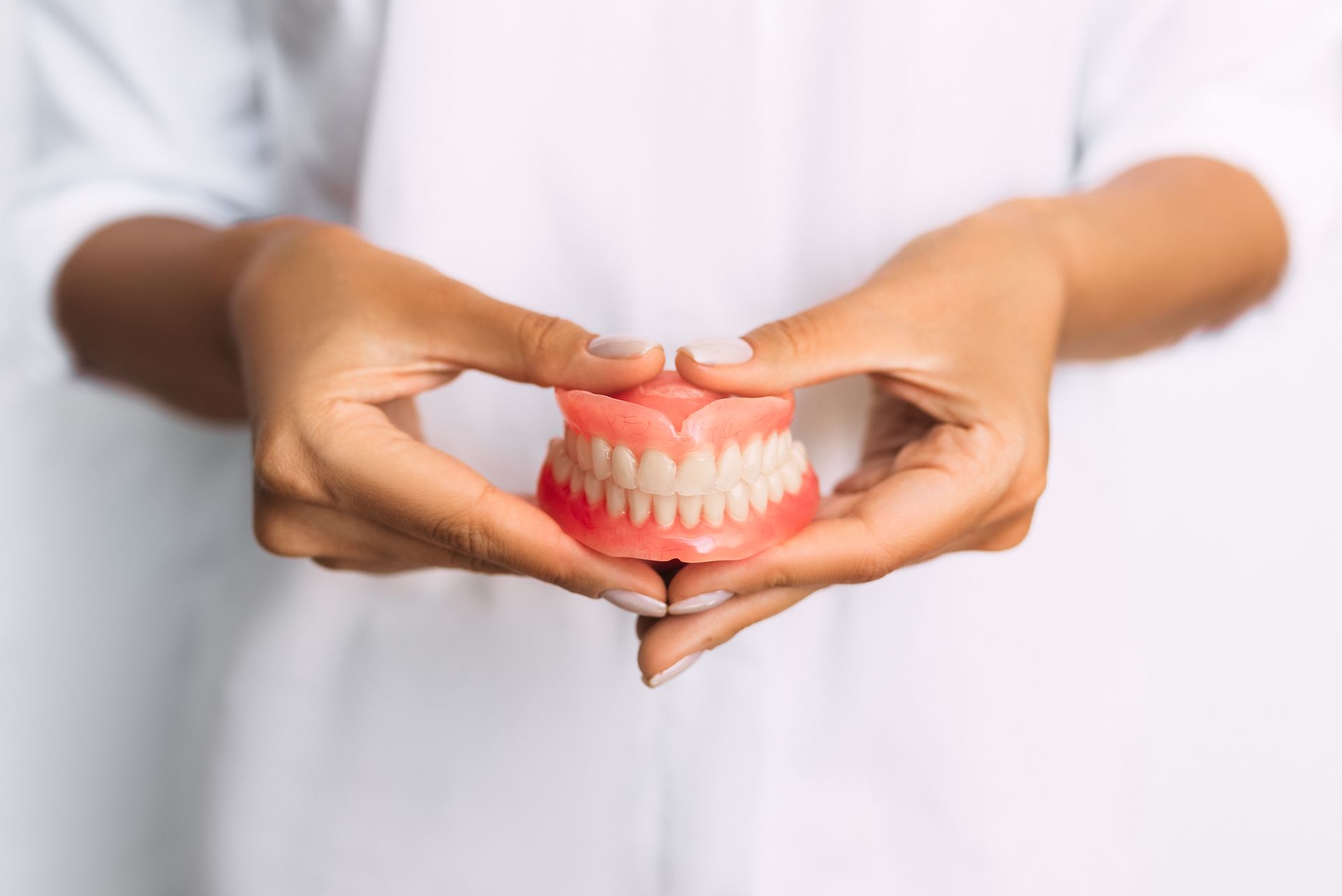
A conventional denture typically lasts about five to eight years before it needs full replacement. That does not mean it stays perfect the whole time. Because the underlying bone changes shape, dentures usually need relining every two to three years to restore a snug fit, and adjustments in between as the gums settle. Daily wear on the acrylic and teeth also adds up.
None of this makes dentures a bad option, but it does mean a realistic lifespan estimate has to include the ongoing maintenance and the replacement cycle. A denture is a well-made appliance resting on tissue that keeps changing, so its life is naturally limited.
How Long Implants Last
Implants are a different category of longevity. The titanium post integrates with the bone and becomes a permanent part of your jaw, and with good care many patients keep the same implant for life. The visible crown attached to it is the part more likely to need attention over the years, often lasting 15 years or more before any wear calls for a replacement, and swapping a crown is far simpler than redoing the foundation.
That durability is why implants are often described as the longest-lasting tooth replacement available. It depends on healthy gums, adequate bone, and consistent hygiene and checkups, but the ceiling is dramatically higher than with dentures. For a deeper look, see our guide on
how long dental implants last.
Why Implants Last Longer
The whole longevity difference traces back to one thing: what happens to the jawbone. When you lose a tooth, the bone that used to support its root begins to shrink, a process called resorption. Dentures do nothing to stop this, and in some ways the pressure of a denture can contribute to it. As the bone recedes, the denture no longer fits the ridge it was made for, which is why relines and replacements become necessary.
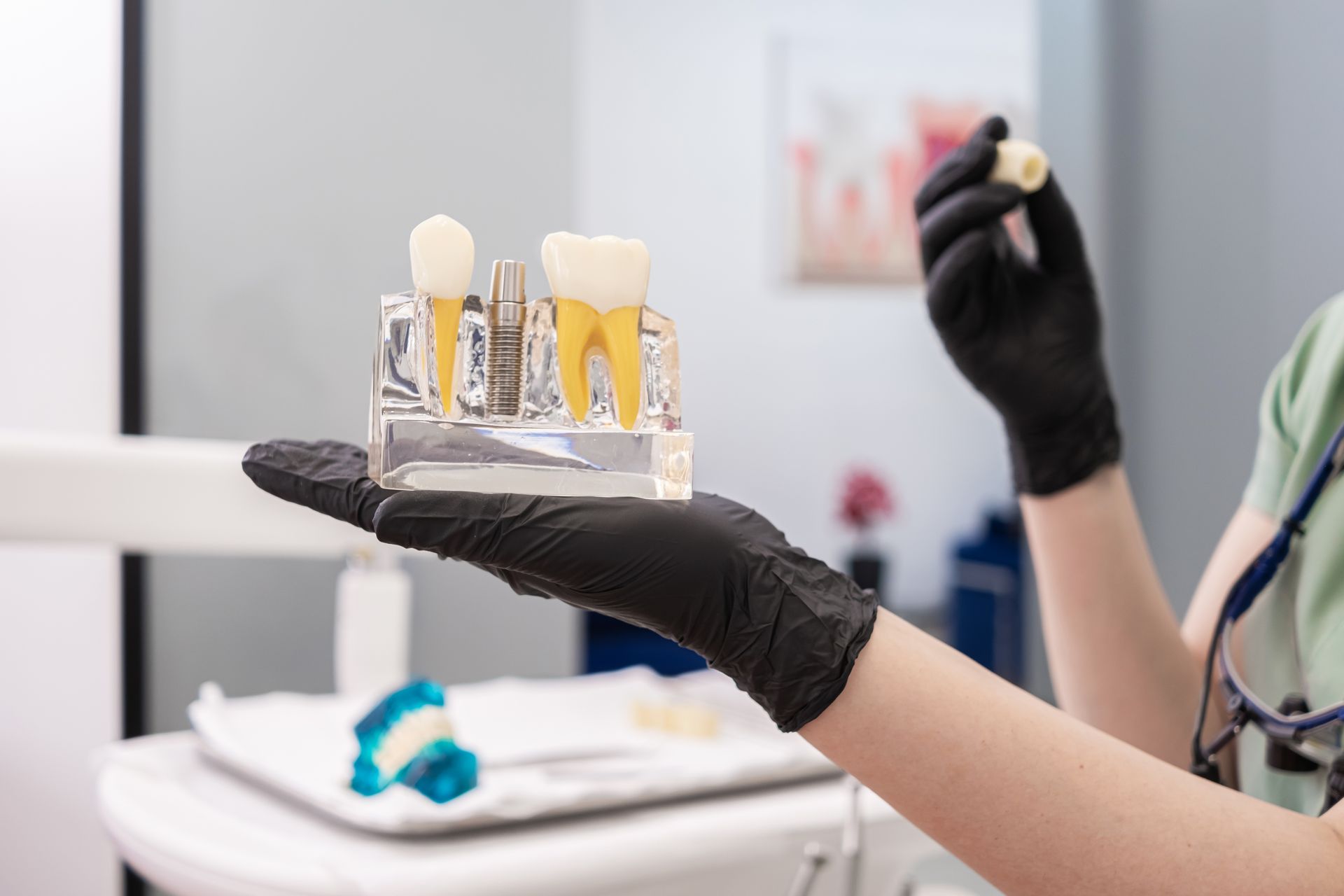
An implant works the opposite way. Because the post is anchored in the bone and transmits chewing forces into it much like a natural root, it stimulates the bone and helps preserve it. That preserved foundation is stable, so it does not loosen or change shape the way a denture-bearing ridge does. Longevity, in other words, is not just about the material; it is about whether the solution keeps its foundation intact.
Lifespan Side by Side
The durability contrast is clearest laid out directly.
| Factor | Dentures | Implants |
|---|---|---|
| Typical lifespan | 5 to 8 years before replacement | 20+ years, post can last a lifetime |
| Ongoing maintenance | Relines every 2 to 3 years | Occasional crown replacement (15+ years) |
| Effect on jawbone | Bone continues to shrink | Bone is preserved |
| Fit over time | Loosens as ridge changes | Stays stable |
The Long-Term Cost Picture
Upfront, dentures are the cheaper option, often in the range of about 2,500 to 3,500 dollars per arch, while a single implant with a crown commonly runs about 3,000 to 6,000 dollars and full-arch implant solutions can range from roughly 20,000 to 30,000 dollars or more per arch. That gap is real and matters.
The long-term math, though, is where longevity changes the story. Over a 20-year span, a denture may be relined several times and replaced two or three times, and those recurring costs add up alongside adhesives and cleansers. An implant that lasts decades may need only an occasional crown replacement. Depending on your case, the total long-term cost of implants can end up closer to, or even below, the running cost of repeatedly replaced dentures. The cheapest option today is not always the cheapest option over a lifetime.
Comfort, Function, and Daily Life
Longevity is not the only thing that follows from that stable foundation. Because implants are fixed and bone-anchored, they feel and function much like natural teeth, they do not slip while eating or speaking, and they need no adhesive. Dentures are removable and can shift, which some wearers manage well and others find frustrating, and they call for daily removal, cleaning, and overnight soaking.
Maintenance differs too. Implants are cared for with normal brushing, flossing, and regular checkups, while dentures require their own cleaning routine and periodic professional visits to check fit and tissue health. These day-to-day differences often matter as much to patients as the raw lifespan numbers.
When Dentures Still Make Sense
Implants are not automatically the right answer for everyone, and dentures remain a genuinely good option in several situations.
- When surgery is not advisable due to health conditions that affect healing.
- When there is significant bone loss and a patient prefers not to undergo grafting.
- When a lower upfront cost is the deciding factor.
- When many or all teeth need replacing quickly and affordably.
For patients who fit these situations, a well-made denture restores function and appearance and is far better than going without. The point is not that dentures are inferior, but that they serve a different set of priorities than long-term permanence.
How to Choose
The longevity answer is clear, but the right choice for you depends on your bone health, medical history, budget, and how many teeth you are replacing. Many patients also land somewhere in between with implant-supported dentures, which use a few implants to anchor a denture for far better stability and bone preservation than a conventional denture. The most reliable way to decide is an evaluation that looks at your specific mouth and goals. To see the full range of tooth replacement choices, read our overview of
missing teeth options.
What Affects How Long Each Actually Lasts
The lifespan ranges are averages, and your own habits and health move the needle in both directions. For implants, the biggest factors are oral hygiene, gum health, and whether you smoke. Smoking sharply raises the risk of implant failure and peri-implantitis, an infection around the implant, while diligent brushing, flossing, and regular checkups help an implant reach the top of its range. Grinding and using teeth as tools work against any restoration.
For dentures, longevity depends heavily on fit and care. Keeping up with relines as the ridge changes, cleaning them properly, storing them correctly, and having the fit checked regularly all extend their useful life and comfort. Neglecting relines lets a loose denture accelerate bone loss and wear unevenly. In both cases, the pattern is the same: the option lasts longest when it is maintained, and the maintenance demands themselves are part of the comparison.
Partial Dentures vs Implants for a Few Teeth
Much of this comparison assumes replacing a full arch, but many patients are only missing one tooth or a few. Here the same longevity logic holds. A partial denture is a removable, lower-cost way to fill gaps, but it rests on and clasps onto remaining teeth and gums, so it shares the same limits: it can loosen, it does nothing to preserve the bone under the gap, and it will need adjustment and replacement over time.
A single implant or a small number of implants replaces those teeth with a fixed, bone-preserving solution that does not depend on the neighboring teeth for support. For a few missing teeth, the durability gap between a partial denture and implants mirrors the full-arch comparison, which is why patients focused on the long term often lean toward implants even for smaller cases, budget permitting.
The Adjustment Period: Early Days With Each
Longevity is the headline, but the early experience with each option differs in ways worth knowing. New denture wearers typically go through an adjustment period of a few weeks. Sore spots are common at first as the gums get used to the appliance, speech can take a little practice, and eating certain foods is a learning curve. These issues usually settle, and follow-up visits to fine-tune the fit help a lot, but it is a real transition.
Implants work differently. There is a healing period after surgery, but once the final restoration is in place, an implant functions so much like a natural tooth that there is little to get used to. You do not relearn how to eat or speak around it, and there is no removable appliance to manage. For many patients, this is a meaningful part of the appeal, separate from how long each option lasts.
Bone Loss and Facial Structure Over Time
One long-term difference deserves special attention because it compounds over the years. When the jawbone is not stimulated by tooth roots, it slowly shrinks, and long-term denture wearers can experience enough bone loss that it changes the shape of the lower face, sometimes giving a collapsed or aged appearance around the mouth. Dentures rest on this shrinking ridge, which is part of why their fit deteriorates and they need replacement.
Implants interrupt this process. Because the post transmits chewing forces into the bone the way a natural root does, it helps maintain bone volume and, with it, the surrounding facial structure. Over a span of many years, this is one of the more significant advantages of implants, and it ties directly back to the longevity question: the same bone preservation that keeps an implant stable for decades also helps protect how your face looks over time.
Compare Your Options in Tukwila
Whether longevity is your top priority or you are balancing it against cost and surgery, our Tukwila team will lay out exactly what each option means for your situation and help you choose with confidence.
Call West Valley Dental at (425) 470-5803 or
contact us to schedule a consultation.

Frequently Asked Questions
Do dentures or implants last longer?
Implants last significantly longer. The titanium implant post can last a lifetime and implants routinely function for 20 years or more, with 20-year survival rates above 90 percent in large studies. Dentures typically need relining every two to three years and full replacement every five to eight years, because the jawbone shrinks beneath them and changes the fit. For longevity, implants are the clear winner.
Why do dentures need to be replaced but implants do not?
It comes down to the jawbone. After tooth loss, the bone gradually shrinks, and dentures rest on that changing ridge, so they loosen and eventually no longer fit, requiring relines and replacement. Implants are anchored in the bone and stimulate it like a natural root, preserving the foundation so it stays stable. The implant post itself can last for life, though the crown on top may need occasional replacement.
Are implants worth the higher cost if they last longer?
For many patients, yes, though it depends on your situation. Implants cost more upfront, but dentures need repeated relines and replacement over the years, so the long-term costs of dentures add up. Over a couple of decades, the total cost of implants can be closer to, or even less than, repeatedly replaced dentures. Implants also preserve bone and function like natural teeth, which many patients value beyond the numbers.
Can dentures ever be the better choice over implants?
Yes. Dentures make sense when surgery is not advisable, when there is significant bone loss and a patient prefers to avoid grafting, when upfront budget is the deciding factor, or when many teeth need replacing quickly and affordably. A well-made denture restores function and appearance and is far better than going without teeth. The right choice depends on your health, bone, budget, and goals, not on lifespan alone.
What about implant-supported dentures?
Implant-supported dentures are a middle option that uses a few implants to anchor a denture in place. They last longer and stay far more stable than conventional dentures, resist slipping, and help preserve the jawbone because of the implants, while costing less than a full set of individual implants. For many patients weighing dentures against implants purely on longevity and stability, this hybrid is worth discussing at a consultation.