Best Options for Replacing Missing Teeth (Compared)

If you're missing one or more teeth, you have more options than ever before, and choosing the right one makes a real difference in your comfort, health, and confidence long term. At West Valley Dental, we've helped patients in Tukwila replace missing teeth using every major solution available, from single implants to full dentures. That experience puts us in a solid position to walk you through what each option actually involves, what it costs, and how they compare.
The short answer: the best option depends on how many teeth you're missing, your bone health, your budget, and how long you want the solution to last. Here's what you need to know.
Why Replacing Missing Teeth Is Important
How Missing Teeth Affect Oral Health and Function
A missing tooth is more than a cosmetic concern. The gap left behind affects your ability to chew properly, can cause surrounding teeth to shift out of position, and puts extra stress on your remaining teeth and jaw joints. Over time, those shifts can change your bite in ways that are difficult and expensive to correct.
Speech can also be affected, particularly when front teeth are missing. Many patients find they compensate unconsciously, which can create new problems over time.
Long-Term Consequences of Leaving Gaps Untreated
One of the most significant long-term effects of missing teeth is bone loss. When a tooth root is no longer present in the jaw, the bone that used to surround it begins to resorb, meaning it gradually shrinks away. This process starts within the first year of tooth loss and continues over time, changing the shape of your face and jaw and making future tooth replacement more complicated.
The longer a gap goes untreated, the fewer options you may have down the road. Acting sooner generally gives you more choices and better outcomes.

Overview of Missing Teeth Replacement Options
Temporary vs. Permanent Solutions
Not all tooth replacement options are designed to last a lifetime. Some are intended as short-term fixes while a permanent solution is being prepared. Others, like dental implants, are built to last decades.
- Temporary options include flipper dentures and temporary bridges, which protect the gap and maintain appearance while you heal or decide on a permanent plan
- Permanent options include dental implants, fixed bridges, and implant-supported dentures, all of which are designed for long-term use
Choosing the Right Option Based on Your Needs
The right solution depends on several factors: how many teeth are missing, where they are in your mouth, the health of your jawbone, your overall health, and your budget. There's no single best option for everyone. A thorough consultation with your dentist is the most reliable way to figure out what fits your specific situation.
Dental Implants
What Dental Implants Are and How They Work
A dental implant is a titanium post that's surgically placed into the jawbone, where it fuses with the bone over a period of several months through a process called osseointegration. Once healed, a crown is attached to the top of the post, creating a replacement tooth that looks, feels, and functions like a natural one.
Implants can replace a single tooth, multiple teeth, or support a full arch of teeth when used with implant-supported dentures or an All-on-4 solution.
Benefits of Implants for Long-Term Tooth Replacement
- Look and feel the most like natural teeth of any replacement option
- Stimulate the jawbone and prevent bone loss
- Don't rely on or affect adjacent teeth
- With proper care, can last a lifetime
- Easy to clean brushing and flossing just like natural teeth
Potential Drawbacks and Considerations
Cost, Healing Time, and Candidacy Requirements
Implants are the most involved and typically the most expensive option upfront. They require a surgical procedure and a healing period of three to six months before the final crown is placed. Not every patient is a candidate right away. Sufficient bone density is required, and patients with certain health conditions or who smoke heavily may need additional evaluation.
The investment is significant, but for patients who are good candidates, implants are widely considered the gold standard in tooth replacement.
Dental Bridges
How Dental Bridges Replace Missing Teeth
A
dental bridge fills a gap by anchoring an artificial tooth (called a pontic) to the natural teeth on either side of the space. Those anchor teeth, called abutments, are prepared by removing a portion of their enamel so that crowns can be placed over them to hold the bridge in place.
Bridges are fixed in place, meaning they're cemented and not removed for cleaning. They can replace one or a few consecutive missing teeth.
Advantages of Bridges for Faster Restoration
- No surgery required
- Completed in two to three appointments
- Restores chewing function and appearance effectively
- More affordable upfront than implants
- Fixed in place, so no removal needed
Limitations and Long-Term Considerations
Impact on Surrounding Teeth and Durability
The main trade-off with a bridge is that it requires altering the healthy teeth on either side of the gap. Those teeth lose enamel permanently to support the bridge, which increases their long-term vulnerability. If a bridge fails or needs replacement, those anchor teeth are affected.
Bridges also don't prevent bone loss beneath the pontic the way implants do. Over time, the bone in that area will still gradually recede. Most bridges last 10 to 15 years before needing replacement.
Dentures (Full and Partial)
Types of Dentures Available
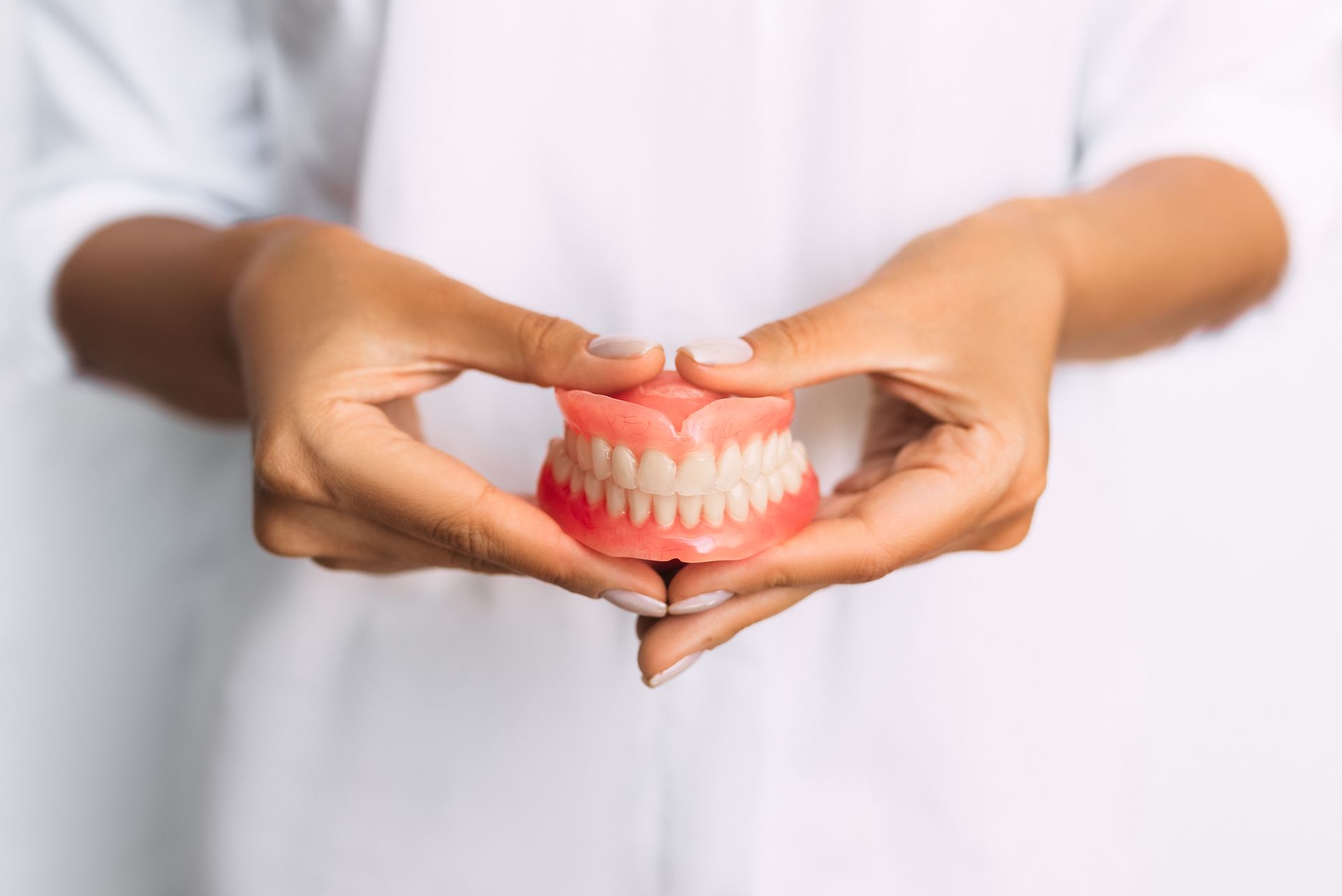
Dentures are removable appliances that replace multiple missing teeth or a full arch. The main types include:
- Full dentures: replace all teeth on the upper or lower arch, or both
- Partial dentures: replace several missing teeth when some natural teeth remain
- Implant-supported dentures: anchored to implants for significantly improved stability and bone preservation
Benefits of Removable Tooth Replacement
- Generally the most affordable upfront option for replacing multiple teeth
- No surgery required for traditional dentures
- Can replace a large number of teeth at once
- Implant-supported versions offer substantially better stability and comfort than traditional removable dentures
Challenges with Fit, Comfort, and Maintenance
Traditional removable dentures come with well-known trade-offs. They can slip or shift while eating and speaking, which many patients find uncomfortable or embarrassing. They require daily removal and cleaning, and they don't prevent bone loss, meaning the fit changes over time as the jaw changes shape.
Adjustments and Long-Term Wear
As the jawbone resorbs, dentures that once fit well will gradually become loose. Regular adjustments and eventual relining or replacement are a normal part of denture ownership. Most traditional dentures need to be replaced every five to ten years.
Implant-supported dentures solve many of these issues by anchoring the appliance to the jaw, eliminating most movement and preserving more bone. Learn more about implant-supported dentures at West Valley Dental.
Comparing Your Options Side by Side
Cost Comparison of Each Option
| Option | Estimated Cost Range |
|---|---|
| Traditional full dentures | $1,000 to $3,500 per arch |
| Partial dentures | $700 to $2,500 |
| Dental bridge (3-unit) | $2,500 to $6,000 |
| Single dental implant + crown | $3,000 to $5,500 |
| Implant-supported dentures | $15,000 to $30,000+ (full arch) |
| All-on-4 implants | $20,000 to $50,000 (full mouth) |
These are general estimates. Costs vary based on the number of teeth involved, materials used, and individual treatment complexity.
Longevity and Durability Differences
| Option | Average Lifespan |
|---|---|
| Traditional dentures | 5 to 10 years |
| Dental bridge | 10 to 15 years |
| Dental implant post | Lifetime (25+ years) |
| Implant crown | 10 to 15+ years |
| Implant-supported dentures | 15 to 20+ years |
Comfort, Appearance, and Function
Implants feel the most like natural teeth, followed closely by implant-supported dentures. Fixed bridges are stable and comfortable for most patients. Traditional removable dentures require the most adjustment and never feel quite as natural, though many patients adapt well over time.
In terms of appearance, all modern options can look very natural when properly fitted and made with quality materials. The aesthetic difference between options is less significant than the functional one.
Maintenance and Care Requirements
- Implants: Brush and floss like natural teeth. No special tools required.
- Bridges: Require flossing under the bridge with a floss threader or water flosser. Otherwise maintained like natural teeth.
- Traditional dentures: Removed nightly, soaked in cleaning solution, brushed separately. Require regular dental visits for adjustments.
- Implant-supported dentures: Depending on the type, may be removable or fixed. Generally easier to maintain than traditional dentures.
Factors to Consider When Choosing a Solution
Number of Missing Teeth and Location
Replacing a single front tooth calls for a different approach than replacing multiple back teeth. Implants work well for single-tooth replacement. Bridges are practical for one to three consecutive missing teeth. Dentures are typically the better fit when many or all teeth in an arch are missing.
Bone Health and Jaw Structure
Implants require adequate bone density to be successful. If significant bone loss has already occurred, a bone graft may be needed before implant placement. Patients with very low bone density may be better candidates for bridges or dentures initially.
Budget and Long-Term Investment
Implants have a higher upfront cost but often cost less over a lifetime because they last longer and don't require the ongoing replacements and adjustments that dentures and bridges typically need. Dentures are the most accessible option upfront but may cost more over the long run when replacements and adjustments are factored in.
Lifestyle and Personal Preferences
Your daily habits, comfort with maintenance routines, and how important factors like eating, speaking, and aesthetics are to you all play a role. Patients who want the lowest-maintenance, most natural-feeling result generally lean toward implants. Those who want a faster, less invasive solution may prefer bridges or dentures.
What to Expect During the Treatment Process
Consultation and Evaluation
Every tooth replacement journey starts with a thorough exam. Your dentist will take X-rays and evaluate your bone density, gum health, and the condition of your remaining teeth. From there, they'll recommend the options that make the most sense for your situation.
Timeline for Each Type of Treatment
- Traditional dentures: Several weeks for fitting and fabrication after any necessary extractions have healed
- Dental bridge: Two to three appointments over two to four weeks
- Single dental implant: Three to six months from placement to final crown, including healing time
- Implant-supported dentures or All-on-4: Several months from the initial surgery to the final restoration
Recovery and Follow-Up Care
Recovery depends on how invasive the procedure is. Dentures and bridges involve minimal downtime. Implant surgery typically involves a few days of soreness and swelling, with most patients returning to normal activity within a week. Follow-up appointments are important for all options to check fit, healing, and function.
How to Care for Your Tooth Replacement
Daily Cleaning and Maintenance Routines
- Implants and fixed bridges: Brush twice daily with a soft-bristle toothbrush. Use a water flosser or floss threader to clean around and under restorations.
- Removable dentures: Remove nightly, brush with a denture brush and non-abrasive cleaner, and soak overnight. Never sleep in traditional dentures unless your dentist specifically advises it.
- Implant-supported dentures: Follow your dentist's specific instructions based on whether your appliance is fixed or removable.
Regular Dental Visits and Adjustments
Professional cleanings and checkups are essential regardless of which option you choose. Your dentist monitors the fit and condition of your restoration, checks the health of surrounding tissue and bone, and catches any early issues before they become bigger problems.
Final Thoughts on Choosing the Best Option
Matching the Right Solution to Your Goals
There's no universally best option for replacing missing teeth. The right choice is the one that fits your oral health, your lifestyle, and your goals. Implants offer the most natural long-term result. Bridges offer a fast, fixed solution without surgery. Dentures are the most accessible route to restoring a full smile when many teeth are missing.
Understanding the trade-offs of each option is the most important step. Most patients find that once they have a clear picture of what each treatment involves, the right choice becomes much clearer.
Importance of Professional Guidance
Self-diagnosing your best option based on what you've read online can lead to costly mistakes. A dentist with experience across all three major replacement options can evaluate your specific situation and help you make a decision you'll be confident in for years to come.
Ready to Find Out Which Option Is Right for You?
If you're missing one tooth or many, the best place to start is a conversation with a dentist who can actually look at your mouth and give you an honest assessment of your options.
Our team at West Valley Dental has helped patients across Tukwila find the right tooth replacement solution for their budget, health, and goals. Contact us today to schedule a consultation and get a clear picture of what's possible for your smile.

Frequently Asked Questions About Missing Teeth Options
What is the most natural-feeling tooth replacement option?
Dental implants. Because the titanium post fuses with the jawbone, implants function and feel the closest to a natural tooth root. Most patients say they forget the implant is there. Implant-supported dentures are the next closest for patients replacing multiple or all teeth.
Can I get an implant years after losing a tooth?
Yes, though significant bone loss may have occurred in the meantime. If there isn't enough bone to support an implant, a bone graft can rebuild the area before placement. Your dentist will evaluate your bone density and advise whether grafting is needed.
Is a dental bridge or implant better for a single missing tooth?
For most patients who are good candidates, an implant is the better long-term option. It doesn't affect adjacent teeth, prevents bone loss, and typically lasts longer. A bridge is a reasonable alternative for patients who want a faster solution, can't have implant surgery, or need a more budget-friendly option upfront.
How soon after losing a tooth should I seek replacement?
As soon as possible. Bone loss begins within the first year of tooth loss, and the surrounding teeth start shifting relatively quickly. The sooner you address the gap, the more options you'll have and the less complex the treatment is likely to be.
Will my tooth replacement look natural?
With a skilled provider and quality materials, yes. Modern crowns, bridges, veneers, and denture teeth are designed to match the color, shape, and translucency of natural teeth. Most people can't tell the difference when the work is done well.