What Is a Dental Emergency? Symptoms You Shouldn't Ignore

A dental emergency is any problem with your teeth, gums, or mouth that needs care within hours rather than days to stop severe pain, control bleeding, treat an infection, or save a tooth. The most urgent signs are a knocked-out adult tooth, facial swelling, fever with tooth pain, bleeding that will not stop, and severe pain that over-the-counter medicine does not touch. Swelling that affects your breathing, swallowing, or vision needs the emergency room, not a dental office. Many other problems, like a small painless chip or a lost filling, can safely wait a few days if you protect the tooth.
Dr. Kuzi Hsue has treated dental emergencies for more than three decades since graduating from the University of Washington School of Dentistry in 1991. At West Valley Dental in Tukwila, we see patients with toothaches, broken teeth, infections, and dental injuries from Renton, Kent, SeaTac, Burien, and across South Seattle, and we treat most of them in our own office, from root canals to extractions. This guide explains how to tell what is urgent and what to do until you can be seen.
In This Guide
- What Counts as a Dental Emergency: How urgent is your problem?
- Symptoms You Shouldn't Ignore: Warning signs that need fast care.
- When to Go to the ER Instead: Signs of a medical emergency.
- What to Do Until You See a Dentist: First aid for common emergencies.
- Problems That Can Usually Wait: When a regular visit is fine.
- What to Tell the Office When You Call: Details that speed up care.
- How to Lower Your Risk: Preventing the next emergency.
- Frequently Asked Questions: Quick answers.
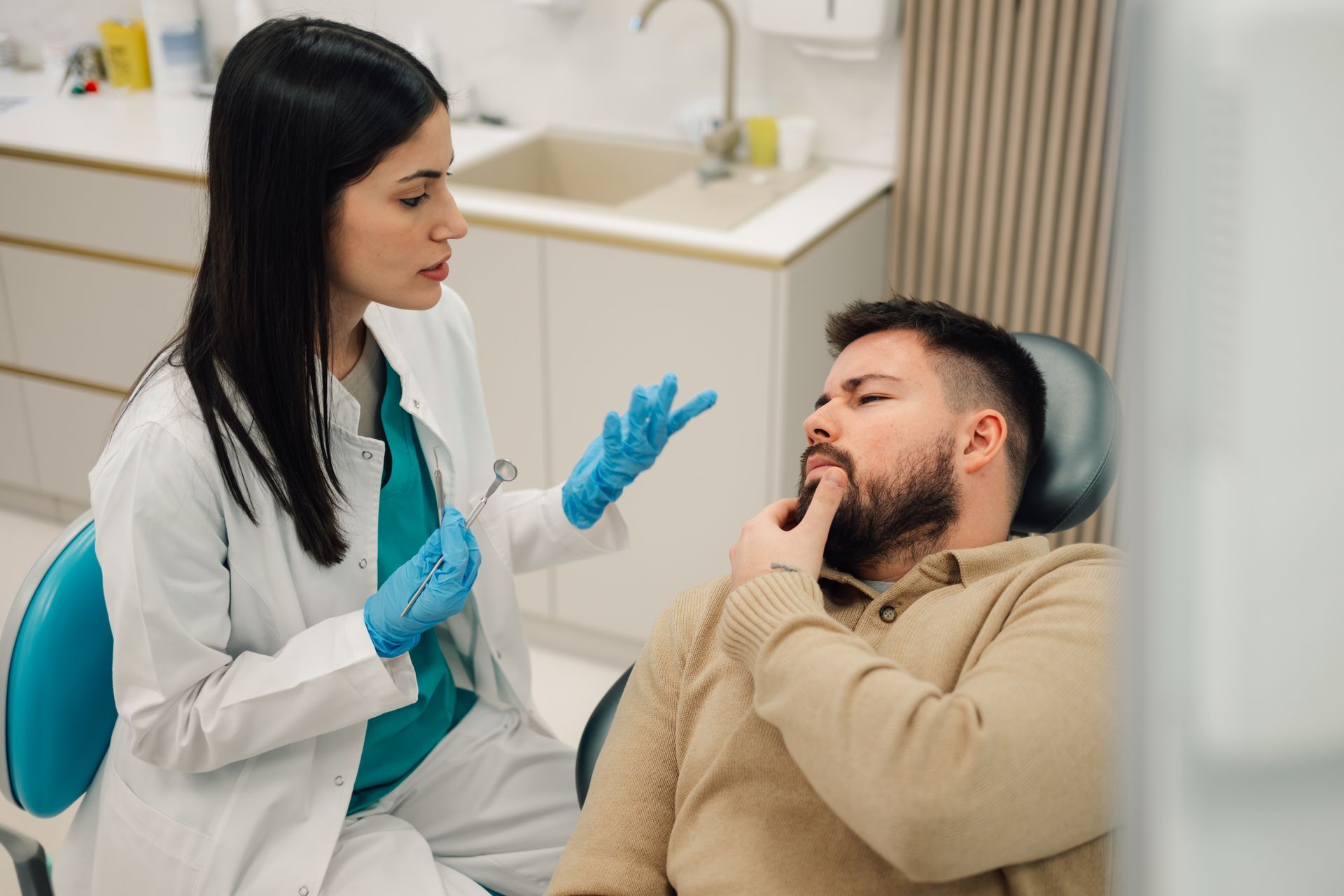
What Counts as a Dental Emergency
Not every toothache is an emergency, and not every emergency hurts. The question to ask is what happens if you wait.
The Simple Test
If waiting a few days could cost you the tooth, let an infection spread, or leave you in severe pain, it is an emergency. If the problem is uncomfortable but stable, it is usually urgent enough for a prompt appointment but not a same-day rush. A knocked-out tooth is the clearest example of time pressure. The best chance of saving it is getting it back in place within about an hour.
Three Levels of Urgency
The table below sorts common situations by where to go and how quickly.
| Situation | Where to Go | How Fast |
|---|---|---|
| Swelling affecting breathing, swallowing, or vision | Hospital emergency room | Immediately |
| Jaw injury, possible broken jaw, or head injury | Hospital emergency room | Immediately |
| Knocked-out adult tooth | Dentist | Within about an hour |
| Facial swelling, fever, or pus with tooth pain | Dentist | Same day |
| Severe pain not controlled by medicine | Dentist | Same day |
| Broken tooth with pain or a pink spot in the center | Dentist | Same day |
| Tooth pushed out of place or loose after an injury | Dentist | Same day |
| Lost crown, small chip, or lost filling without pain | Dentist | Within a few days |
Symptoms You Shouldn't Ignore
These symptoms usually mean something is getting worse, not better. Call a dentist promptly if you have any of them:
- Throbbing or constant tooth pain, especially pain that wakes you up at night or spreads to your ear, jaw, or temple.
- Swelling in your gums, cheek, face, or jaw, which often points to an infection or abscess.
- Fever along with tooth pain or swelling, a sign the infection may be spreading.
- A pimple-like bump on the gum, pus, or a bad taste that keeps coming back.
- Bleeding that does not stop after about 10 minutes of firm pressure with gauze.
- A knocked-out, loose, or shifted adult tooth after a fall, sports injury, or accident.
- A broken tooth with sharp pain, sensitivity that lingers, or a pink or red dot in the break.
- Pain when you bite down and release, which can signal a cracked tooth.
- Sudden numbness in your lip, chin, or tongue after an injury or with tooth pain.
One symptom people often misread is pain that suddenly goes away. After days of a bad toothache, relief can feel like good news, but it often means the nerve inside the tooth has died. The infection can keep spreading without pain, so the tooth still needs to be checked.
When to Go to the ER Instead
A dental office is the right place for most dental emergencies, but some situations are medical emergencies first.
Go to the Emergency Room or Call 911 If You Have
Go straight to the hospital for swelling that makes it hard to breathe, swallow, or open your mouth; swelling that spreads toward your eye or down your neck; a high fever with facial swelling; a possible broken jaw; a head injury; or heavy bleeding that will not stop. A spreading dental infection can become serious quickly, and hospital teams can protect your airway and give IV antibiotics if needed.
What the ER Can and Cannot Do
An emergency room can manage pain, treat a serious infection, and handle injuries beyond the teeth. In most cases, though, it cannot fix the tooth itself. You will usually still need a dentist to drain an abscess from the tooth, do a root canal, or remove the tooth. Plan to follow up with a dental office as soon as you are stable.
What About Urgent Care?
Walk-in urgent care clinics can be a good middle ground on a night or weekend when you have a swollen face but no trouble breathing. They can assess how serious the infection looks and may prescribe antibiotics or pain relief. Like the ER, they generally cannot treat the tooth, so antibiotics are a bridge to dental care, not a replacement for it. Call a dental office first thing the next morning.
What to Do Until You See a Dentist
The right first aid depends on the problem. These steps can protect the tooth and ease your pain until your appointment.
Knocked-Out Tooth
Speed matters most here. For an adult tooth:
- Pick it up by the crown, the white chewing part, never the root.
- Rinse it gently with milk or water if it is dirty. Do not scrub it or wrap it in tissue.
- Try to put it back in the socket and hold it in place by biting gently on a clean cloth.
- If you cannot reinsert it, keep it in milk or tucked inside your cheek, and do not let it dry out.
- Get to a dentist right away, ideally within an hour.
For a child's baby tooth, do not try to put it back in, since that can damage the adult tooth developing underneath. Keep the tooth, control any bleeding, and call your dentist.
Chipped or Broken Tooth
Rinse with warm water, save any broken pieces in milk, and cover sharp edges with dental wax or sugar-free gum. Use a cold compress on your cheek for swelling. Our guide on how to fix a chipped tooth explains the repair options. If you suspect a crack rather than a chip, our post on cracked tooth symptoms can help you tell the difference.
Severe Toothache
Rinse with warm salt water, floss gently to remove anything stuck between teeth, and take an over-the-counter pain reliever as directed on the label. Do not put aspirin directly on the gum, since it can burn the tissue. Our post on tooth pain relief at home covers more ways to stay comfortable, but these steps only buy time. A tooth that hurts badly needs to be examined.
Swelling or Abscess
Rinse with warm salt water several times a day and use a cold compress on the outside of your face. Do not apply heat, and do not try to pop a bump on your gum. An abscess needs professional treatment, often a root canal or extraction, and antibiotics alone rarely solve it. Our guide to root canal vs. extraction explains how that choice is made.
Lost Crown, Filling, or Broken Dental Work
Keep the crown and bring it with you, since it can often be recemented. Over-the-counter temporary dental cement can hold it in place for a day or two, but do not use household glue. If an implant crown feels loose or comes off, call soon, and see our guide to the signs of dental implant failure. A broken denture should not be glued at home. For braces, a poking wire can be covered with orthodontic wax until it is adjusted.
Cut Lip, Tongue, or Cheek
Rinse gently and press a clean cloth or gauze firmly on the area for 10 minutes. A cold compress helps with swelling. If the bleeding will not stop or the cut is deep, get urgent care.
Problems That Can Usually Wait
Some dental problems are real but not urgent. These can usually wait for the next available regular appointment, as long as they are not getting worse:
- Mild sensitivity to hot or cold that fades within seconds.
- A small chip with no pain or sharp edge.
- A lost filling that does not hurt, protected with temporary filling material.
- A dull ache that responds well to over-the-counter pain medicine.
- Mild gum soreness around a wisdom tooth that improves with rinsing, which our post on wisdom tooth pain relief covers.
If any of these change, such as pain increasing, swelling appearing, or a fever starting, treat it as urgent. Our guide to the
signs you need to see a dentist covers other problems worth scheduling soon.
What to Tell the Office When You Call
A few details help the team decide how quickly you need to be seen. Mention when the problem started, which tooth or area hurts, whether you have swelling or a fever, whether there was an injury, and whether you are taking any medications. If a tooth was knocked out, say so first. Photos of a broken tooth or swollen area can also help if the office asks for them. If you are a new patient, have your dental insurance information ready so the team can check your coverage while you are on the way.
How to Lower Your Risk
Many dental emergencies start as small problems that were left alone. A cavity that could have been a simple filling becomes an abscess. A cracked filling becomes a broken tooth. Regular checkups catch these early. For sports, a fitted mouthguard is one of the best protections against knocked-out and broken teeth. If you grind your teeth at night, a nightguard reduces the risk of cracks. And avoid chewing ice, hard candy, and popcorn kernels, which cause a surprising number of broken teeth.
Call Now for Emergency Dental Care in Tukwila
If you have severe pain, swelling, a broken tooth, or a knocked-out tooth, do not wait for it to get worse. Call now at (425) 470-5803 and tell our team what is going on. We work to see dental emergencies as quickly as possible, including same-day appointments when available, and offer sedation options for anxious patients.
Learn more about our
emergency dentistry services in Tukwila, review our
insurance and financing options, or
contact us. Our office is at 15668 W Valley Hwy in Tukwila.

Frequently Asked Questions
What is considered a dental emergency?
A dental emergency is a problem that needs care within hours to relieve severe pain, stop bleeding, treat an infection, or save a tooth. Common examples include a knocked-out adult tooth, facial swelling, a dental abscess, a badly broken tooth, and bleeding that will not stop with pressure.
Should I go to the ER or a dentist for tooth pain?
For most tooth pain, a dentist is the right choice because they can treat the cause. Go to the ER if you have swelling that affects your breathing, swallowing, or vision, a high fever with facial swelling, a possible broken jaw, or bleeding you cannot control.
Is a chipped tooth a dental emergency?
It depends. A small chip with no pain can usually wait a few days. A chip with sharp pain, lingering sensitivity, bleeding from the tooth, or a pink spot in the center may mean the nerve is exposed and should be seen the same day.
Can a tooth infection go away on its own?
No. A tooth infection may seem to improve for a while, especially if the nerve dies and the pain stops, but the infection stays and can spread. It needs treatment, usually a root canal or extraction, to clear it.
How long do you have to save a knocked-out tooth?
The best chance of saving a knocked-out adult tooth is getting it back in place within about an hour. Keep it moist in milk or inside your cheek, avoid touching the root, and get to a dentist as quickly as possible.