Signs You Need a Root Canal: Symptoms You Shouldn't Ignore

The most common signs you may need a root canal are a toothache that throbs or lingers, sensitivity to hot or cold that stays for 30 seconds or more after the food or drink is gone, pain when you bite or chew, a pimple-like bump on the gum, swelling near a tooth, and a tooth that has turned gray or dark. These signs point to inflamed or infected pulp, the nerve and blood supply inside the tooth. Some teeth that need root canals cause no symptoms at all and are found only on an X-ray. Pain that suddenly stops is not always good news, because it can mean the nerve has died while infection continues. The only way to know is an exam with testing and X-rays.
West Valley Dental is a family and restorative practice at 15668 West Valley Highway in Tukwila, led by Dr. Kuzi Hsue, who earned his DDS from the University of Washington in 1991. Dr. Hsue and our team diagnose and treat tooth infections for patients from Tukwila, Renton, Kent, Burien, SeaTac, and South Seattle, and we have earned more than 820 patient reviews. This guide explains which symptoms point toward a root canal, which ones usually do not, and what happens next.
In This Guide
- Common Signs You May Need a Root Canal: The symptoms to watch.
- Symptom Guide: What Your Tooth May Be Telling You: A quick reference table.
- Why the Pulp Gets Inflamed or Infected: How the problem starts.
- Silent Root Canal Problems: When there is no pain.
- Symptoms That Usually Do Not Mean a Root Canal: Other common causes.
- How a Dentist Confirms You Need a Root Canal: Testing and X-rays.
- What Happens If You Wait: Risks of delay.
- Root Canal or Extraction?: Saving the tooth.
- Teeth That Commonly Need Root Canals: Molars, injured teeth, and crowns.
- Frequently Asked Questions: Quick answers.


Common Signs You May Need a Root Canal
Not every symptom means a root canal, but these are the ones we take most seriously:
- Lingering sensitivity to hot or cold. A short zing that fades in a few seconds is usually minor. Sensitivity that lasts 30 seconds or longer after the trigger is gone often means the nerve is inflamed.
- Spontaneous or throbbing pain. Pain that starts on its own, wakes you at night, or throbs with your heartbeat is a common sign of pulp inflammation or infection. It often gets worse when you lie down.
- Pain when biting or chewing. Tenderness when you bite down, or when you tap the tooth, can mean infection has reached the tissue around the root tip.
- A pimple or bump on the gum. A small bump near a tooth that may drain fluid or a bad taste, sometimes called a gum boil, often signals an abscess.
- Swelling. Swollen gums near one tooth, or swelling in the cheek or jaw, can point to infection.
- A darkened tooth. A tooth that turns gray, brown, or darker than its neighbors, often after an injury, may have a dying nerve.
- Deep decay or a large crack. Decay or a crack that reaches close to the pulp often leads to a root canal.
- Pain that radiates. Infected teeth can cause pain in the jaw, ear, or temple, which sometimes makes it hard to tell which tooth is the source.
Symptom Guide: What Your Tooth May Be Telling You
| Symptom | What It Often Means | How Soon to Call |
|---|---|---|
| Quick zing with cold that fades in seconds | Exposed root, small cavity, or worn enamel | Mention it at your next visit |
| Sensitivity that lingers 30 seconds or more | Inflamed nerve, possibly irreversible | Within a few days |
| Throbbing pain that wakes you at night | Advanced pulp inflammation or infection | As soon as possible |
| Pain when biting or tapping the tooth | Infection near the root tip, or a cracked tooth | As soon as possible |
| Pimple or bump on the gum | Abscess draining through the gum | Within a day or two |
| Swelling in the face or jaw | Spreading infection | Same day; seek emergency care with fever or trouble breathing or swallowing |
| Gray or darkened tooth | Nerve damage, often after trauma | Within a week or two |
| Pain that suddenly stopped | Possibly a nerve that has died | Still needs an exam |
This table is a general guide, not a diagnosis. When in doubt, call.
Why the Pulp Gets Inflamed or Infected
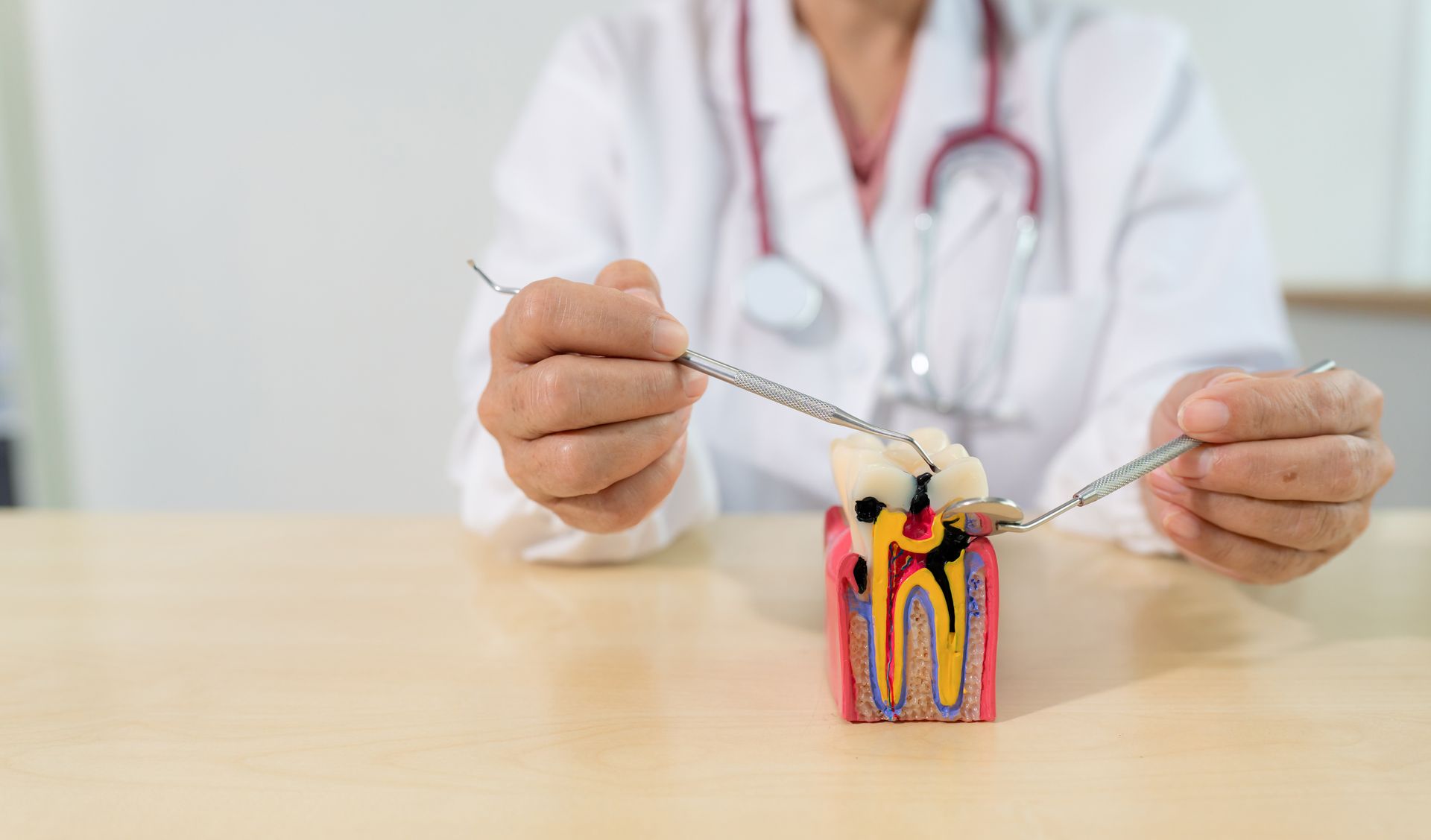
The pulp is the soft tissue in the center of a tooth that contains nerves and blood vessels. It can become inflamed or infected for several reasons.
Deep Decay
A cavity that reaches the inner layers of the tooth lets bacteria reach the pulp.
Cracks and Fractures
Cracks can let bacteria travel into the pulp, even when they are too small to see. Our guide to cracked tooth symptoms explains how cracks show up.
Trauma
A blow to the mouth from a fall or sports injury can damage the nerve, sometimes months or years before symptoms appear.
Repeated Dental Work
Teeth that have had several large fillings or crowns over the years can become stressed and inflamed. Our article on filling vs. crown explains how large restorations affect a tooth.
Reversible vs. Irreversible Inflammation
Mild pulp inflammation can sometimes calm down once the cause, such as a cavity, is treated and sealed. When inflammation is severe or infection sets in, the pulp cannot heal on its own, and a root canal is needed to save the tooth.
Silent Root Canal Problems
Not every tooth that needs a root canal hurts.
Infections Without Pain
A tooth with a dead nerve can develop an infection at the root tip that causes little or no pain. It may be discovered on a routine X-ray as a dark area around the root.
Why Silent Infections Still Matter
Even without pain, infection can damage bone around the tooth and flare up later, sometimes suddenly. That is one reason regular checkups and X-rays matter. Our guide on how often to see the dentist explains recommended intervals.
When Pain Disappears
If a tooth hurt for days and then the pain stopped, the nerve may have died. The infection can continue without warning signs. Do not cancel an appointment just because the pain went away. Tell the office that the pain stopped, since that detail helps with diagnosis.
Symptoms That Usually Do Not Mean a Root Canal
Many kinds of tooth discomfort have other causes. These usually do not require a root canal:
Brief Sensitivity
Short sensitivity to cold that fades within seconds is often caused by exposed roots, gum recession, worn enamel, or whitening. Sensitive toothpaste and treating the cause usually help.
Sensitivity After a New Filling
Mild sensitivity for a few days or weeks after a filling is common and usually fades. Our guide to tooth sensitivity after a filling explains what is normal.
Gum Problems
Sore, bleeding gums are more often a sign of gum disease than a nerve problem. Our guide to gum disease stages covers the warning signs.
Sinus Pressure
Upper back teeth can ache during a sinus infection or allergy flare because their roots sit near the sinus. This pain often affects several teeth at once and changes when you bend over.
Grinding and Clenching
Sore teeth and jaw muscles in the morning often point to grinding, especially during stressful periods. A night guard may help.
How a Dentist Confirms You Need a Root Canal
Symptoms raise the question, and testing answers it.
Exam and History
We ask when the pain started, what triggers it, how long it lasts, and whether anything makes it better or worse.
Testing the Tooth
Cold testing shows how the nerve responds, and comparing it with neighboring teeth helps pinpoint which tooth is the problem. Tapping and bite tests help identify inflammation around the root or a crack.
X-Rays
X-rays show deep decay, large restorations, and dark areas near the root tip that suggest infection or bone loss.
Clear Answers
After testing, the dentist explains whether the tooth needs a root canal, a filling, or another treatment, and what the options are if the tooth cannot be saved. For tooth pain at home while you wait for a visit, see our guide to
tooth pain relief at home.


What Happens If You Wait
Waiting rarely helps when a tooth needs a root canal.
Infection Can Spread
Untreated infection can spread into the jawbone and surrounding tissues. In rare cases, it can spread further and become a medical emergency.
The Tooth May Become Unsaveable
The longer infection continues, the more tooth structure and bone may be lost, which can turn a saveable tooth into an extraction.
Antibiotics Are Not a Cure
Antibiotics can help control spreading infection, but they cannot reach the inside of a tooth with a dead nerve. Without treatment, the infection usually returns.
When to Seek Emergency Care
Swelling with fever, trouble swallowing or breathing, or swelling that spreads toward the eye or neck needs immediate attention. Our guide to
what is a dental emergency covers when to call and when to go to the ER.
Root Canal or Extraction?
Why Saving the Tooth Is Often Best
A root canal removes the infected pulp, cleans and seals the inside of the tooth, and lets you keep your natural tooth. Most back teeth then need a crown for strength.
When Extraction May Be Recommended
If a tooth is severely cracked, has very little structure left, or has advanced bone loss, extraction and replacement with an implant or bridge may make more sense. Our guide to root canal vs. extraction compares the options.
Recovery
Most patients feel relief soon after a root canal, with mild soreness for a few days. Our guide on
how long a root canal hurts explains the normal recovery timeline.
Teeth That Commonly Need Root Canals
Any tooth can need a root canal, but some situations come up more often.
Molars With Large Fillings
Back molars often carry the largest fillings and take the most chewing force, which makes them the most common teeth to need root canals as they age.
Front Teeth After an Injury
Front teeth are more likely to be hit in a fall or sports accident. Damage to the nerve can show up as darkening or sensitivity months later, even if the tooth looked fine at first.
Teeth Under Old Crowns
A tooth under a crown can still develop decay at the edges or nerve problems over time. Biting pain or a bump on the gum near a crowned tooth deserves an exam.
Comfort During Treatment
Many people worry that a root canal will be painful. With modern anesthesia, the procedure usually feels similar to a filling. For patients who feel anxious, we offer
sedation options to help you relax. Our team will explain each step before we begin and check on your comfort throughout.
Get Your Tooth Checked in Tukwila
If you have any of these symptoms, the sooner we examine the tooth, the more likely we can save it with a simple treatment. Our team offers prompt appointments for tooth pain and will explain what we find and your options clearly. Learn more about our emergency dentistry and dental crowns.
Call West Valley Dental at (425) 470-5803 or
contact us. We are located at 15668 West Valley Highway in Tukwila.

Frequently Asked Questions
How do I know if I need a root canal or just a filling?
Sensitivity that fades quickly and a cavity that has not reached the nerve can often be treated with a filling. Lingering sensitivity, throbbing pain, swelling, or signs of infection on an X-ray usually mean the pulp is involved and a root canal is needed.
Can a tooth need a root canal without pain?
Yes. A tooth with a dead nerve can develop an infection at the root tip with little or no pain. These problems are often found on routine X-rays.
Will the pain go away on its own if I need a root canal?
The pain may stop if the nerve dies, but the infection usually continues. The tooth still needs treatment, even if it no longer hurts.
Is a darkened tooth a sign of needing a root canal?
Often, yes. A tooth that turns gray or dark, especially after an injury, may have a damaged or dying nerve. An exam and X-ray can confirm whether treatment is needed.
Can antibiotics fix a tooth that needs a root canal?
No. Antibiotics can help control spreading infection temporarily, but they cannot clear infection inside a tooth with a dead nerve. A root canal or extraction is needed to resolve the problem.