How Long Does a Dental Crown Last? Signs It's Time for Replacement

Dr. Kuzi Hsue has placed and replaced crowns for patients in Tukwila and South Seattle for almost 30 years, since graduating from the University of Washington School of Dentistry in 1991. At West Valley Dental, we see crowns that are a few months old and crowns that have been in place for decades, and the difference usually comes down to a handful of habits and warning signs that patients can learn to spot. This guide explains how long crowns typically last, what wears them out, and how to tell when yours needs attention.
Quick Answer: Most dental crowns last somewhere between 5 and 15 years, and well-cared-for crowns often go well beyond that. Gold and other metal crowns usually last longest, followed by zirconia and porcelain-fused-to-metal, with all-porcelain crowns somewhat more prone to chipping. A crown usually needs replacing because of decay at its edge, a crack or chip, a loose fit, gum recession that exposes the margin, or problems with the tooth underneath. Pain when biting, a dark line at the gum, a rough edge, or a crown that feels loose are all reasons to have it checked.
In This Guide
- Typical Crown Lifespan: By material and location.
- Why Crowns Eventually Fail: The common causes.
- Signs It Is Time to Replace Your Crown: What to watch for.
- Real-Life Scenarios: Three common cases.
- Questions to Ask: Before replacement.
- Can a Crown Be Repaired Instead?: When fixes work.
- What Crown Replacement Involves: Step by step.
- Insurance and Crown Replacement: Timing limits.
- Habits That Help Crowns Last: Daily care.
- Crown Care in Tukwila: Schedule a check.
- Frequently Asked Questions: Quick answers.

Typical Crown Lifespan
| Crown Type | Common Lifespan Range | What Tends to End Its Service |
|---|---|---|
| Gold or metal alloy | Often 20 years or more | Decay at the margin, rarely fracture |
| Zirconia | Often 10 to 15 years or more | Decay at the margin, wear on the opposing tooth if not polished |
| Porcelain fused to metal | Often 10 to 15 years | Porcelain chipping, gray line at the gum as gums recede |
| All-porcelain or glass-ceramic | Often 5 to 15 years | Chips or fractures under heavy biting |
| Resin or temporary crown | Weeks to a few years | Wear and breakage, since it is designed to be short-term |
These ranges are general. Many crowns outlast them, and some fail sooner because of the factors below.
Location Changes the Math
Crowns on back molars take far more chewing force than crowns on front teeth, so they face more wear and fracture risk. Front crowns are more often replaced for appearance, such as a color mismatch or a visible margin.
The Tooth Underneath Matters Most
A crown can only last as long as the tooth supporting it stays healthy. Decay, gum disease, or a fracture in the tooth underneath ends a crown's life no matter how strong the crown material is.
Why Crowns Eventually Fail
Decay at the Margin
The edge where the crown meets the natural tooth is the most vulnerable spot. If plaque sits there, decay can start under the crown where it is hard to see. This is the most common reason crowns need to be replaced.
Grinding and Clenching
Nighttime grinding puts heavy, repeated force on crowns. It can chip porcelain, crack all-ceramic crowns, and loosen the cement over time.
Gum Recession
As gums pull back, the crown margin can become exposed. On porcelain-fused-to-metal crowns, that may show as a dark line. Exposed root surfaces are also more prone to decay.
Cement Washout
Over many years, the cement under a crown can break down, allowing bacteria to leak underneath. The crown may feel loose or come off.
Nerve or Root Problems
A tooth with a crown can still develop nerve inflammation or infection, especially if it had a large filling or deep decay before. Our guide on signs you need a root canal explains the symptoms. Sometimes a root canal can be done through the existing crown, and sometimes the crown needs to be replaced afterward.
Accidents and Hard Foods
Biting ice, popcorn kernels, or hard candy, or an injury to the mouth, can crack or dislodge a crown in a single moment.
Signs It Is Time to Replace Your Crown
- Pain when biting down on the crowned tooth.
- Sensitivity to hot or cold that is new or getting worse.
- A crown that feels loose or shifts slightly when you chew.
- A visible chip, crack, or rough spot you can feel with your tongue.
- A dark line or gap at the gumline that was not there before.
- Floss that snags or shreds at the edge of the crown.
- A bad taste or odor coming from around the crown.
- Swelling or tenderness in the gum next to the crown.
- A bite that feels off, with the crown hitting before other teeth.
Many of these problems start small and painless. Regular exams with
digital X-rays are often how decay under a crown is caught before it becomes a larger problem. If biting pain is your main symptom, our guide on
why a tooth hurts when you bite down covers the possible causes.
Crown Lifespan in Real Life: Three Common Scenarios
A Molar Crown After a Root Canal
A back tooth that has had a root canal is more brittle, so a crown protects it from splitting. These crowns often last many years, but they take heavy chewing force. If the patient grinds at night, a night guard can be the difference between a crown that lasts a decade and one that cracks early.
An Older Front Crown With a Dark Line
Many porcelain-fused-to-metal crowns placed years ago now show a gray line at the gum as the gums have receded. The crown may be perfectly sound, but patients often choose to replace it with an all-ceramic crown for appearance.
A Crown With a Leaking Edge
A crown that looks fine can still have decay starting at its edge, especially in patients with dry mouth or frequent snacking. These are often found on X-rays before any symptoms appear, which is why routine exams matter.
Questions to Ask Before Replacing a Crown
- What exactly is wrong with my current crown, and can you show me on the X-ray?
- Is the tooth underneath healthy, or will it need a root canal or buildup?
- Can the crown be repaired instead of replaced?
- What material do you recommend for this tooth, and why?
- Will my insurance cover the replacement based on the age of the current crown?
- What can I do to make the new crown last longer?
Can a Crown Be Repaired Instead?
Small Chips
A minor chip in porcelain can sometimes be smoothed or repaired with tooth-colored bonding, particularly if it is not in a high-pressure biting area. Bonding repairs are usually a short-term solution compared with a new crown.
A Crown That Came Off
If a crown comes off in one piece and the tooth underneath is healthy, it can often be cleaned and recemented. Keep the crown in a safe container, avoid chewing on that side, and call the office. Do not use household glue.
When Repair Is Not Enough
Decay under the crown, a large fracture, a poor fit, or significant recession usually means the crown needs to be replaced so the tooth can be cleaned and sealed properly.
What Crown Replacement Involves
- Exam and X-rays to check the crown, the tooth underneath, and the surrounding bone and gums.
- Removing the old crown, usually by carefully sectioning it.
- Cleaning the tooth and removing any decay, then rebuilding the core if needed.
- Shaping the tooth and taking impressions or scans for the new crown.
- A temporary crown to protect the tooth while the permanent crown is made.
- Placing the new crown, checking the fit, color, and bite, and bonding or cementing it in place.
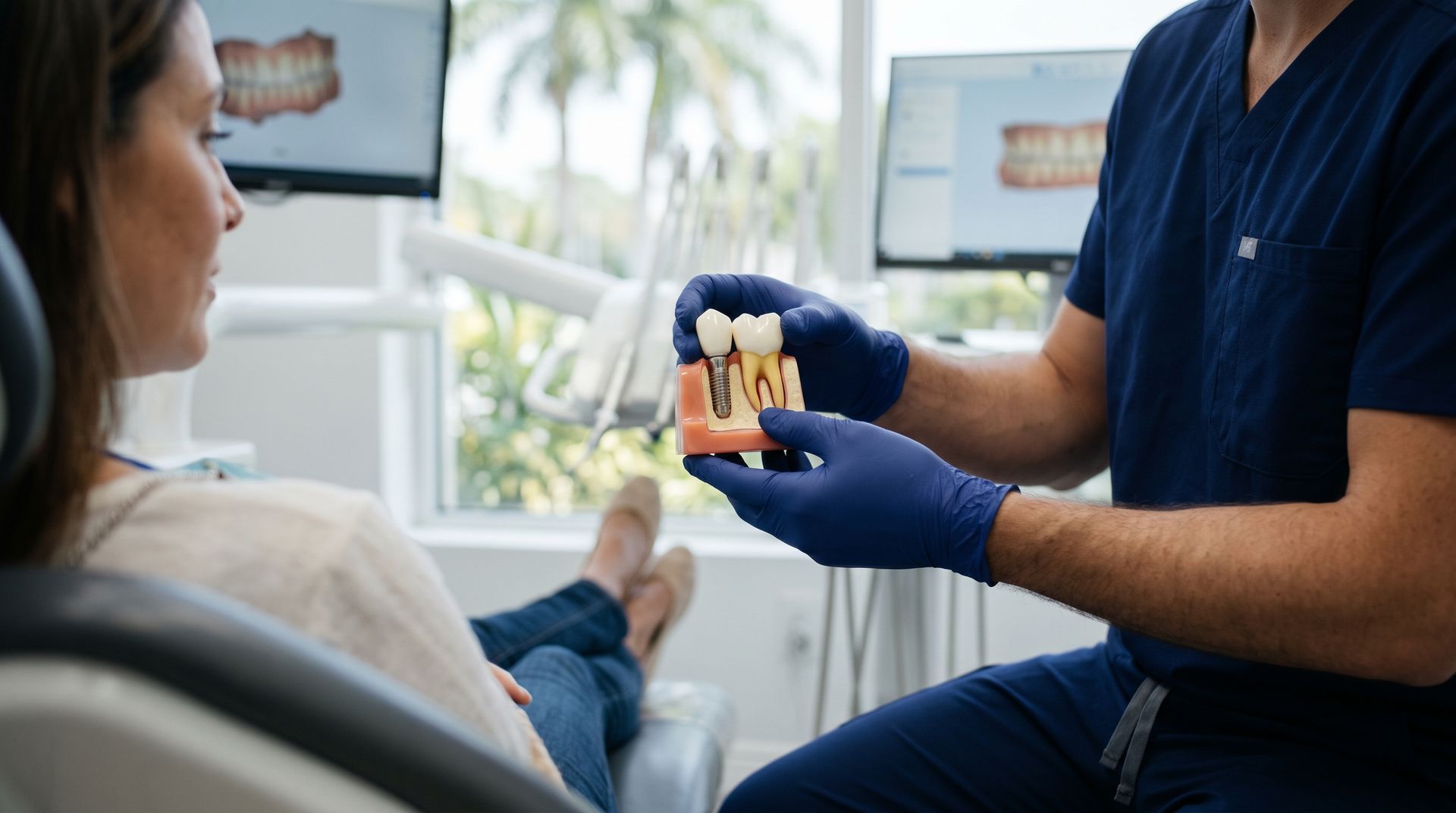
If the tooth cannot be saved, an implant-supported crown or a bridge may be the next option. Our page on
implant-supported crowns explains that path, and our
crowns and bridges page covers both restorations.
Insurance and Crown Replacement
Replacement Time Limits
Many dental plans only cover replacing a crown on the same tooth after a set number of years, commonly five. If your crown fails sooner, the replacement may not be covered unless there is a specific reason, such as an accident.
Ask Before Treatment
We can check your benefits and give you an estimate before replacing a crown. Our insurance and financing page explains payment options.
Planning Ahead
If a crown is showing early wear, timing its replacement with your plan's limits and annual maximum can lower out-of-pocket costs, as long as waiting does not put the tooth at risk.


Habits That Help Crowns Last
Clean the Edge
Angle your toothbrush toward the gumline and floss carefully along each side of the crown every day. A water flosser can help around crowns and bridges.
Wear a Night Guard if You Grind
A custom night guard is one of the best ways to protect crowns from chips, cracks, and loosening.
Skip the Hardest Foods
Avoid chewing ice, hard candy, and popcorn kernels, and do not use your teeth to open packages.
Keep Your Checkups
Cleanings and exams let us spot early decay at the margin, recession, and bite changes. Our guide on
how long fillings last
covers similar care for other restorations.
Crown Care in Tukwila
If your crown is chipped, loose, sensitive, or just old enough that you are wondering how much life it has left, we can check it, take X-rays, and explain your options. Learn more about how a new dental crown can restore a damaged tooth.
Call West Valley Dental at (206) 388-2262 or
contact us online. We are located at 15668 W Valley Hwy in Tukwila, near Southcenter, and serve patients from Renton, Kent, SeaTac, Burien, and South Seattle.

Frequently Asked Questions
How long do dental crowns usually last?
Most crowns last about 5 to 15 years, and many last longer with good care. Gold and metal crowns usually last longest, while all-porcelain crowns are more prone to chipping.
How do I know if my crown needs to be replaced?
Pain when biting, new sensitivity, looseness, chips or cracks, a dark line at the gum, floss that snags, or a bad taste around the crown are all signs to have it checked.
Can decay form under a crown?
Yes. The crown itself cannot decay, but the natural tooth at the crown's edge can. Decay under a crown is one of the most common reasons for replacement.
Does insurance pay to replace an old crown?
Many plans cover replacement after a set period, often five years. Coverage varies, so ask for a benefits check before treatment.
What happens if I do not replace a failing crown?
Decay or a crack under a failing crown can spread, leading to infection, the need for a root canal, or even losing the tooth. Catching problems early usually means a simpler fix.