Emergency Dentist 24 Hours Near Me: A Tukwila Dentist's Guide to After-Hours Tooth Pain

If you're searching for an emergency dentist 24hrs near me, you're probably in pain and you want help fast. Here's the direct answer: some tooth pain can wait, but swelling, infection signs, or dental trauma should be treated as soon as possible. The sooner you get the right care, the better the chance of saving your tooth and stopping the problem from getting worse.
This guide is written from the perspective of a dental team that regularly handles urgent calls, evaluates tooth pain, treats infections, and manages dental injuries after hours. We use exams and dental X-rays to find the cause, not just cover symptoms, and we've seen what helps patients feel better quickly and safely.
When Tooth Pain Is a True Dental Emergency
Signs you should call an emergency dentist right away
Call an after-hours dentist immediately if you have facial swelling (especially if it's spreading), fever, chills, or feeling sick alongside tooth pain, trouble swallowing or breathing, severe nonstop toothache that won't calm down, pus, a bad taste, or a "pimple" on the gums (a possible abscess), a knocked-out tooth or a tooth that is loose after an injury, heavy bleeding that won't stop, or a broken tooth with strong pain or sharp edges cutting your mouth. Swelling and infection are the biggest red flags, these problems can escalate quickly.
Symptoms that can wait until the next business day
Some issues still need dental care, but may be okay to schedule soon rather than tonight if pain is mild and there's no swelling: a small chip with no pain, a lost filling that is only slightly sensitive, a crown that fell off but the tooth isn't hurting badly, or mild soreness after recent dental work that improves over time. If you're not sure, it's still smart to call. A quick phone triage can tell you what to do next.
When to go to urgent care or the ER instead
Go to the emergency room right away if you have swelling that affects your eye, neck, or throat, fever with facial swelling, trouble breathing or swallowing, severe dehydration from vomiting or inability to drink, or a serious face injury where you may have broken bones. Hospitals can manage airway and serious infection risks, but you'll still need a dentist to treat the tooth source afterward.

What to Do Immediately at Home While You're Trying to Get Seen
Safe pain control and swelling reduction
While you're working to find an emergency dentist open now, focus on safe basics: use an ice pack on the outside of your face (10–15 minutes on, then off), rinse gently with warm salt water, keep your head elevated especially at night, and if you can take them safely, over-the-counter anti-inflammatory medications may help. If you have medical conditions, blood thinners, or allergies, be cautious and ask a professional before taking anything.
What to avoid that can make pain worse
Avoid these common mistakes: don't put aspirin directly on gums (it can burn tissue), don't use heat on facial swelling (heat can worsen swelling in infections), don't chew on the painful side, and don't ignore spreading swelling or fever.
How to protect a damaged tooth until your appointment
If a tooth is broken, chipped, or a filling or crown fell out: rinse gently and keep the area clean, cover sharp edges with dental wax if you have it, avoid hard foods, and if a crown came off keep it in a safe container and bring it to your appointment.
Common After-Hours Dental Problems and What They Usually Mean
Severe toothache or throbbing pain (decay, nerve inflammation, infection)
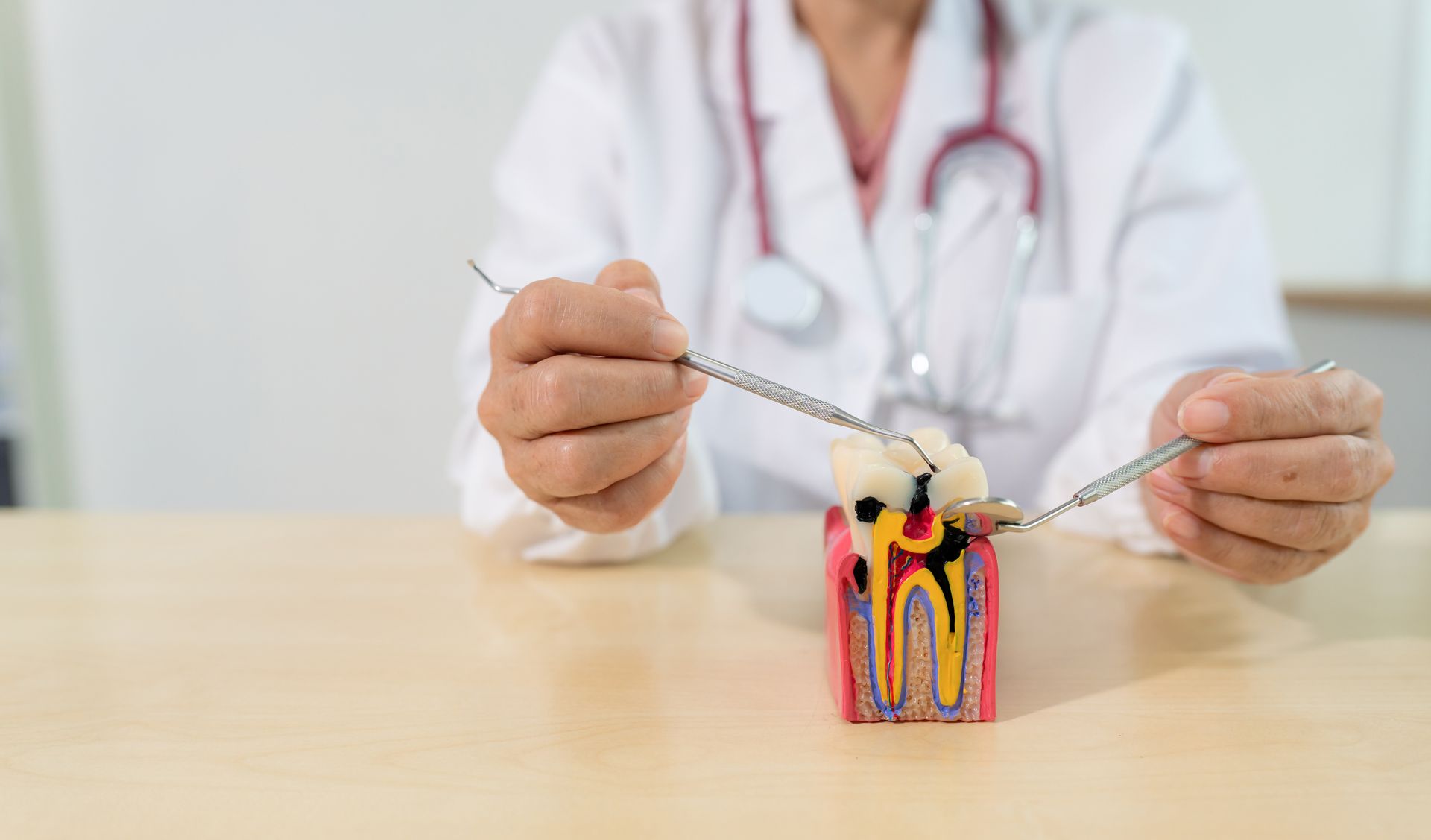
A deep, throbbing toothache often points to a cavity that reached the nerve, a cracked tooth irritating the nerve, or infection inside the tooth or around the root. Pain that wakes you up, pulses, or worsens when you lie down is a common "urgent" pattern.
Swollen gum or "pimple" on the gum (possible abscess)
A bump on the gum, bad taste, or pus can mean a dental abscess. Even if the pain comes and goes, the infection can still be active. Abscesses should be taken seriously, especially if you have swelling or feel sick.
Cracked, broken, or chipped tooth (fracture depth matters)
A small chip may be minor. But a deeper crack can cause sharp pain when biting or strong sensitivity to cold. The deeper the fracture, the more urgent it becomes, cracks can spread with continued pressure.
Lost filling or crown (sensitivity, exposed tooth structure)
When a filling or crown falls out, the inner tooth may be exposed, leading to sensitivity to cold and air, pain with chewing, and a higher risk of further damage. Even if it doesn't hurt much yet, it's best to fix it soon.
Knocked-out or loose tooth from trauma (time-sensitive)
A knocked-out tooth is one of the most time-sensitive dental emergencies. Fast action can make the difference between saving or losing the tooth permanently.
Wisdom tooth flare-ups and jaw pain (inflammation vs. infection)
Wisdom teeth can cause gum swelling, jaw soreness, and pain in the back of the mouth. Sometimes it's inflammation; sometimes it's infection. If you have swelling, fever, or trouble opening your mouth, treat it as urgent. Our wisdom teeth removal team can evaluate whether the tooth needs to come out to prevent recurring episodes.
How an After-Hours Emergency Dental Visit Typically Works
Triage questions you'll be asked on the phone
An after-hours dentist will usually ask about pain location and intensity, any swelling, fever, or bad taste, any trauma such as a fall or sports injury, any bleeding that won't stop, and what medications you've taken along with any allergies. These questions help determine whether you need to come in right away or can be seen at the first available morning appointment.
Exam and imaging to find the cause (not just treat symptoms)
Most emergency visits include a focused exam of the tooth and gums, checking bite and mobility, and dental X-rays to find infection, cracks, or decay. The goal is to identify the root cause so you don't keep repeating the same emergency.
Same-visit relief options vs. follow-up treatment planning
Some problems can be fully treated the same day. Others need same-day pain relief and stabilization first, followed by a separate visit for the final solution. A good plan explains what's urgent now and what can be scheduled next.
Emergency Treatments That Relieve Pain Fast
Stabilizing a broken tooth (bonding, smoothing, temporary repair)
For broken teeth, your dentist may smooth sharp edges, place a temporary filling or bonding material, and protect the tooth until a crown or more permanent fix can be completed.
Treating infection (drainage when needed, medication when appropriate)
If there is an abscess, treatment may include draining the infection, cleaning the area, and prescribing medication when appropriate. An important note: medication alone often doesn't remove the source of the infection. Dental treatment, addressing the tooth itself, must follow.
Emergency root canal vs. extraction (how the decision is made)
If the nerve is infected, you may need a root canal to save the tooth or an extraction if the tooth can't be saved. The choice depends on crack depth, bone support, and how much tooth structure remains. If a tooth does need to come out, our team can discuss tooth replacement options so you're not left with a gap long-term.
Re-cementing or replacing a crown or filling temporarily
If a crown fell off, dentists can sometimes re-cement it if the fit is still good. If not, a temporary solution may be placed until a new crown is made.
Tooth Infection and Facial Swelling: Why Timing Matters
How infections spread and why swelling changes urgency
Tooth infections can spread into nearby spaces in the face and neck. That's why swelling changes the urgency level dramatically. The earlier you treat an infected tooth, the lower the risk of larger complications.
Red flags that require immediate medical attention
Get urgent medical help right away if you have rapidly spreading swelling, fever and weakness, trouble breathing or swallowing, or swelling under the jaw or toward the neck. These are signs a dental infection has moved beyond the tooth.
What "antibiotics alone" can and can't do without dental treatment
Antibiotics may reduce symptoms temporarily, but they usually don't fix the source, such as an infected nerve or trapped bacteria inside a tooth. Without dental treatment, the infection often returns, sometimes worse than before.
Dental Trauma After Hours
Knocked-out tooth steps (handling, storage, timing)
If a tooth is knocked out: pick it up by the crown not the root, rinse quickly with saline or milk if dirty (don't scrub), try to place it back in the socket if you can do so safely, or store it in milk or saliva (not dry tissue), and get to a dentist immediately, time is critical.
Cracked tooth after injury (how to reduce further damage)
If you think a tooth cracked, avoid chewing on it, stick to soft foods, use a cold compress for swelling, and call for an urgent evaluation even if pain is mild at first. Cracks worsen with continued pressure.
Bleeding and soft-tissue injuries (lip, cheek, gum)
For mouth cuts, apply gentle pressure with clean gauze, use a cold compress, and if bleeding won't stop or the cut is large, seek urgent care.
What to Expect for Cost and Timing
What an emergency exam typically includes
An emergency visit often includes a focused exam, necessary X-rays, a diagnosis and treatment plan, and same-day relief when possible.
Common factors that change the total cost
Cost changes based on whether X-rays are needed, whether treatment is a temporary fix or a procedure like a root canal or extraction, the severity of infection, swelling, or trauma, and the time of day and availability.
Insurance and payment options to ask about during scheduling
When you call, ask whether your insurance is accepted, what the exam fee is, whether payment plans or financing are available, and what forms of payment are accepted. Clear information upfront reduces stress when you're already dealing with pain.
Finding an "Emergency Dentist 24hrs Near Me" in Tukwila
What "24 hours" and "after-hours" really mean (on-call vs. open clinic)
Some offices are truly open late. Others use an on-call system where a dentist can advise you and bring you in if needed. When you search emergency dentist 24hrs near me, ask whether they're open right now or on-call, and whether you can be seen tonight or need the first available morning slot.
What to look for before you book
Try to choose a place that can do an exam and take X-rays, treat infections, broken teeth, and trauma, offer same-day stabilization, and provide clear follow-up options. Not every "emergency clinic" can handle the same range of treatments. Our emergency dental care page has more detail on what we can address on the same visit.
Location-focused: Tukwila, Southcenter, and nearby Seattle
If you're in or near Tukwila, mention your location when you call along with your symptoms so the team can guide you to the right next step as quickly as possible.
How to Prevent Another After-Hours Tooth Pain Episode
Early warning signs you shouldn't ignore
Many emergencies start as small problems. Call sooner if you notice sensitivity that's getting worse, a dull ache that comes and goes, a crack line or sharp edge you can feel with your tongue, gum swelling near one tooth, or a filling that feels loose or high. Early care is almost always simpler and less costly than emergency care.
Short checklist for protecting teeth
A few habits significantly lower your risk: brush and floss daily, don't chew ice or hard candy, wear a nightguard if you grind, and keep up with regular cleanings and exams so issues are caught before they become emergencies.
What to do if you lose a filling or crown again
If a filling or crown comes out, keep the area clean, avoid chewing on that side, call to schedule a repair soon, and save the crown if you still have it. Waiting too long can allow cracks or deeper decay to develop, turning a simple fix into something more involved.
Get Relief Tonight
If you're in pain and searching for an emergency dentist 24hrs near me, don't wait until it gets unbearable, especially if there's swelling, infection signs, or trauma involved. When you call, have your pain level, location, any swelling details, fever, injury information, current medications, and allergies ready. That helps us get you the right care faster. Contact West Valley Dental for guidance and the earliest available evaluation in Tukwila.

Frequently Asked Questions
How do I know if my toothache is an emergency or if it can wait until morning?
The clearest indicators that it can't wait are swelling, fever, or pain so severe you can't sleep or function. If your face is swelling, you feel sick, or there's a bad taste or visible pus near a tooth, that's urgent, don't wait. If pain is uncomfortable but manageable, there's no swelling, and no sign of infection, it's usually safe to call first thing in the morning for the earliest available slot. When in doubt, most dental offices have after-hours lines specifically to help you make this call.
Can a dental infection go away on its own if I take leftover antibiotics?
No, and this is one of the more dangerous misconceptions in dental care. A dental infection has a physical source: bacteria inside a tooth or in the bone around it. Antibiotics can reduce the bacterial load and temporarily ease symptoms, but they can't clear the source. Once the antibiotics finish, the infection typically returns. More seriously, dental infections can spread to the jaw, neck, and airway, which is a medical emergency. If you have antibiotics on hand, they may help you get through to a same-day appointment, but they are not a substitute for dental treatment.
What should I do with a tooth that got knocked out, is it really possible to save it?
Yes, in many cases, but only if you act within roughly 30–60 minutes and handle the tooth correctly. Pick it up by the crown (the white part you chew with), not the root. If it's dirty, rinse it briefly with milk or saline, don't scrub it. Try reinserting it into the socket if you can do so without forcing it. If not, keep it in a container of milk or between your cheek and gum to prevent drying out. Then get to a dentist immediately. The window for successful reimplantation closes fast.
I have dental anxiety, is it possible to get through an emergency visit without being overwhelmed?
Yes. Emergency visits are focused and typically shorter than routine appointments because the priority is relieving your pain quickly. Most dental teams are experienced at working with anxious patients and will explain each step before doing it. If anxiety is a significant concern, mention it when you call, many offices can accommodate sedation even for emergency visits. Getting the infection or pain under control actually relieves a major source of stress, so most patients feel significantly better after the appointment than they expected going in. We offer sedation options to help make even urgent visits as comfortable as possible.
After an emergency visit, how do I know if I need more follow-up treatment?
Your dentist should tell you explicitly before you leave. Most emergency visits address the immediate problem, draining an abscess, stabilizing a broken tooth, or relieving nerve pain, and then outline the next step needed to fully resolve it, whether that's a crown, a root canal, an extraction, or simply monitoring. If you're not given a clear follow-up plan, ask for one in writing. Signs that something is still wrong after an emergency visit include worsening swelling, returning fever, increasing pain after the first 48 hours, or a loose temporary repair.